Prepared by: AsiaQuartz Editorial Team
Technical review by: AsiaQuartz Product, QC & Supply Chain Team
Last updated: July 2026
Quick answer
First, silica-free quartz can be considered for residential countertops, vanities and selected wall applications. But the name alone does not establish performance, absolute zero silica or suitability for every use. Specifically, specify the exact SKU, review a quantitative crystalline-silica report. Confirm the TDS/SDS and intended applications, approve physical and full-slab samples. And require the fabricator to follow product-specific processing and dust-control instructions.
First, the term silica-free is used commercially, but it is not a single universal formulation or legal definition. In Australia, the engineered-stone prohibition applies to artificial benchtops. Specifically, panels and slabs containing at least 1% crystalline silica by weight and meeting the rest of the regulatory definition; a product below that threshold is outside that definition. But that does not necessarily mean an absolute analytical result of zero or a dust-free fabrication process.
For residential specifiers, the practical question is not whether every silica-free product behaves the same. It is whether the quoted product has the design, tested performance, fabrication route. However, warranty and application approval required for the kitchen or bathroom being designed.
This guide complements the Silica-Free Quartz Commercial Applications Guide and the Silica-Free Decorative Quartz Buyer Guide.
Why Residential Specifiers Should Care
First, the principal respirable-crystalline-silica risk arises when silica-containing materials are cut, ground, drilled or polished and fine dust becomes airborne. Ordinary use of an installed, intact countertop does not create the same exposure pathway. Specifically, future repair, removal or on-site modification can reintroduce dust-generating work. So the fabricator and installer still need an exposure-control plan.
First, australia’s domestic engineered-stone ban took effect on July 1, 2024. And the import prohibition for covered benchtops, panels and slabs took effect on January 1, 2025. Specifically, other jurisdictions use different definitions and controls. Do not describe a product as “compliant” without naming the destination, requirement, tested product and supporting report.
Silica-free does not mean dust-free
First, a lower-crystalline-silica formulation can reduce one important hazard. But cutting and grinding may still create dust from other mineral fillers, resins, adhesives, substrates and surrounding construction materials. Specifically, complete as much work as possible in a controlled shop and use wet methods, local exhaust ventilation. HEPA-filtered extraction, housekeeping and PPE as required by the local rules and exposure assessment.
Residential Specification Gate: Six Items to Confirm
| Item | What to request | Why it matters |
|---|---|---|
| Product identity | SKU, formulation or product version, slab format, thickness and finish. | Prevents a report or sample from being applied to a different product. |
| Crystalline-silica evidence | Quantitative report showing laboratory, method, sample preparation, reporting basis and detection/quantification limit. | Defines the actual claim instead of relying on the product name. |
| TDS and SDS | Current documents for the finished product and intended market. | Provides declared composition, handling, performance and limitations. |
| Application approval | Written confirmation for countertop, vanity, splashback, wet-area wall or other intended use. | Not every product is approved for every exposure or installation system. |
| Physical approval | Small sample, full-slab visual and fabricated edge or joint mock-up where needed. | Digital images cannot establish tone, scale, repetition or edge appearance. |
| Fabrication and warranty | Tooling guidance, dust controls, adhesive/seam guidance, care manual and written warranty. | Processing and installation can affect performance and warranty coverage. |
Kitchen Performance: Verify the SKU, Not the Category
First, silica-free resin-bound surfaces can be suitable for residential kitchens. But heat, stain, scratch, impact and chemical behavior vary with the mineral system, resin, finish, thickness and manufacturing process. Specifically, use the product’s test data, care instructions and warranty rather than a universal category promise.
| Performance area | Evidence to review | Residential guidance |
|---|---|---|
| Heat and thermal shock | Manufacturer test data, care instructions and warranty exclusions. | Use trivets or heat pads. Do not promise a safe pan temperature unless the product file states one. |
| Stain and chemical resistance | Test method, substances tested, contact time, finish and approved cleaning list. | Clean spills promptly and avoid strong alkalis, solvents, paint stripper, oven cleaner and other chemicals not approved by the manufacturer. |
| Scratch and abrasion | Product-specific abrasion or surface data and a physical sample in the selected finish. | Use a cutting board and avoid dragging abrasive grit or heavy cookware across the surface. |
| Impact and edge durability | Fabricated edge sample, cut-out guidance, corner-radius requirements and installation support rules. | Edges and cut-outs are often more vulnerable than the broad surface. Protect them from concentrated impact. |
| Cleanability | Care manual, surface finish, seam system and any project-required hygiene or food-contact documentation. | Use mild cleaner and a soft cloth. Do not assume “non-porous” automatically proves every hygiene, VOC or food-contact requirement. |
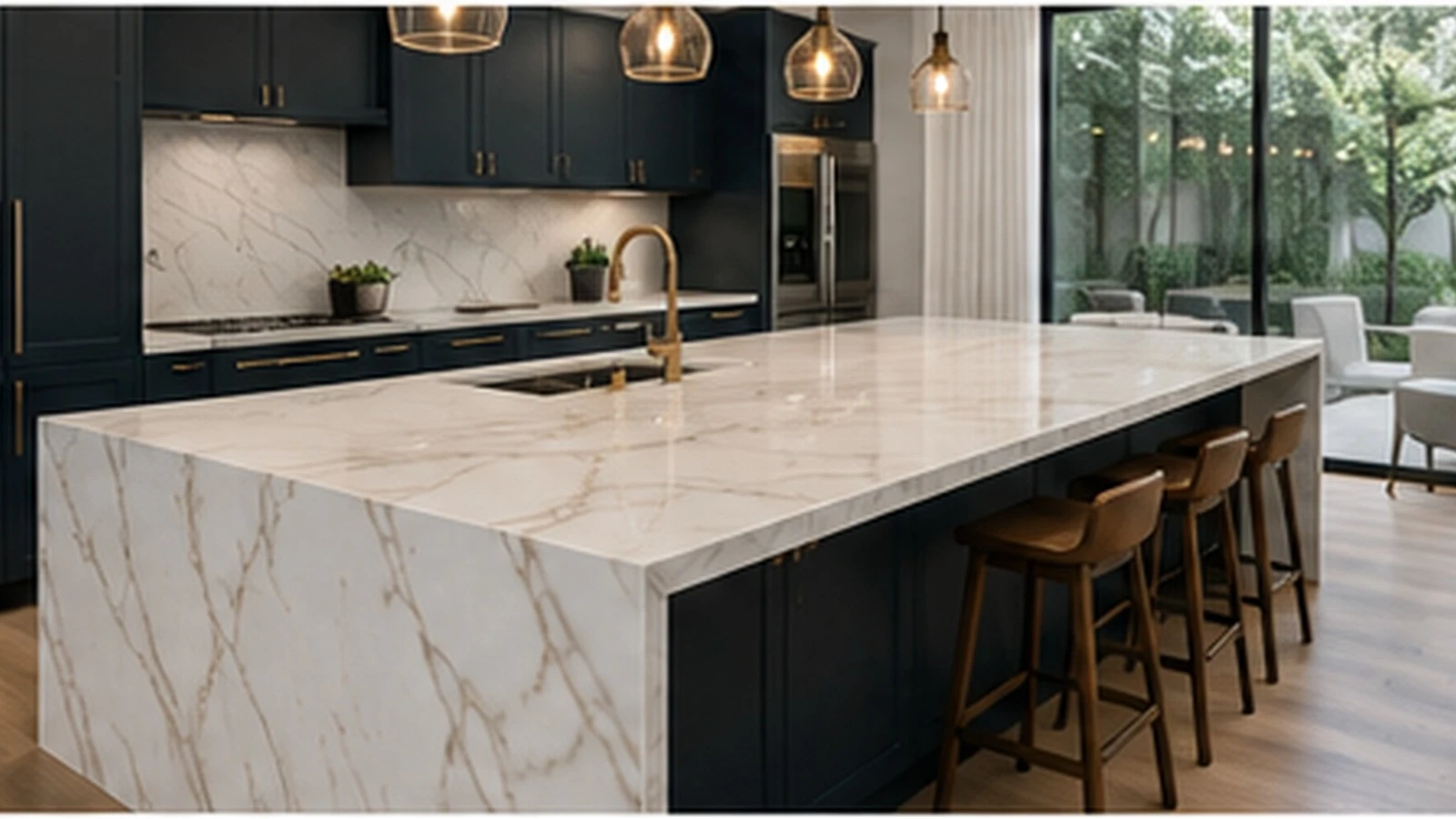
First, a specifier should not promise that all silica-free quartz is harder than marble, more heat-resistant than solid surface or identical to conventional quartz. Those comparisons require product-specific methods and samples. Specifically, the useful residential message is simpler: select a tested product, protect it from direct heat and impact. And follow the approved care instructions.
Bathroom Applications: Surface, Joints and Waterproofing Work as a System
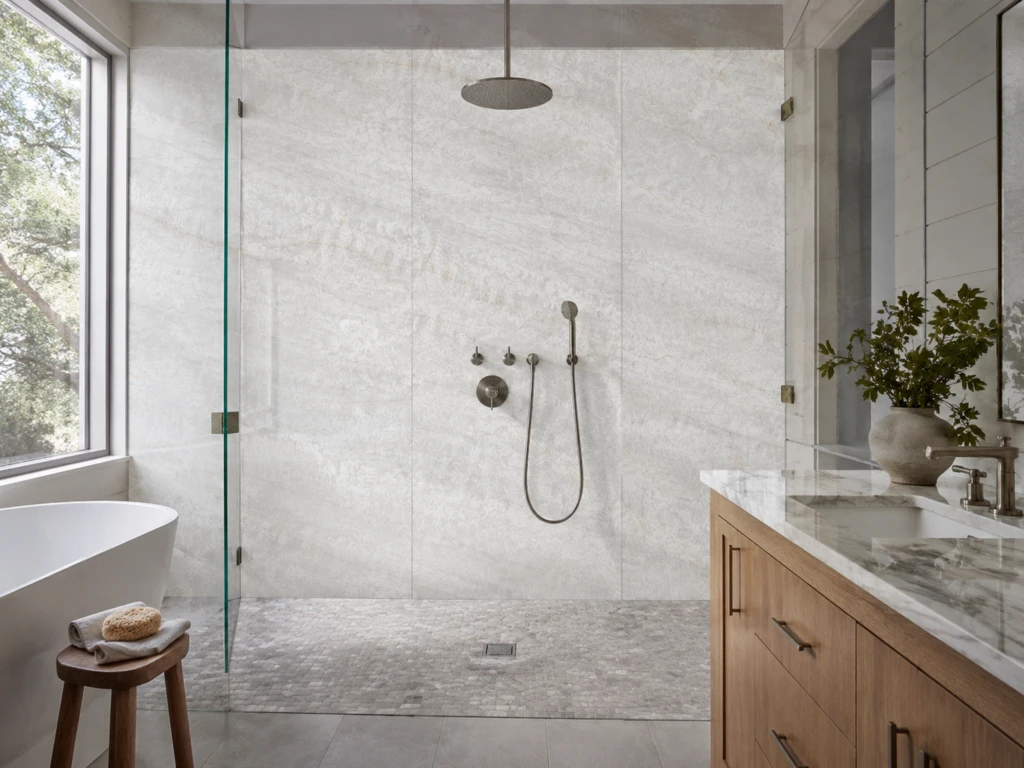
First, vanity tops and splashbacks are common residential applications when the product is approved for them. The slab surface may be low-maintenance, but the installation also depends on seams, sealants, edge details, substrate movement and water management.
For shower walls or tub surrounds, obtain written approval for wet-area wall use. Confirm the substrate, waterproofing membrane, adhesive, joint width, movement joints, support and panel-size limits. However, large panels can reduce grout lines, but they do not replace a compliant waterproofing and installation system.
First, avoid blanket statements that natural stone will fail quickly or that a silica-free surface will look unchanged for a fixed number of years. Natural-stone performance varies by mineralogy, finish, sealing and care; manufactured-surface performance varies by formulation, exposure and installation.
Design Options: Approve the Actual Collection and Full Slab
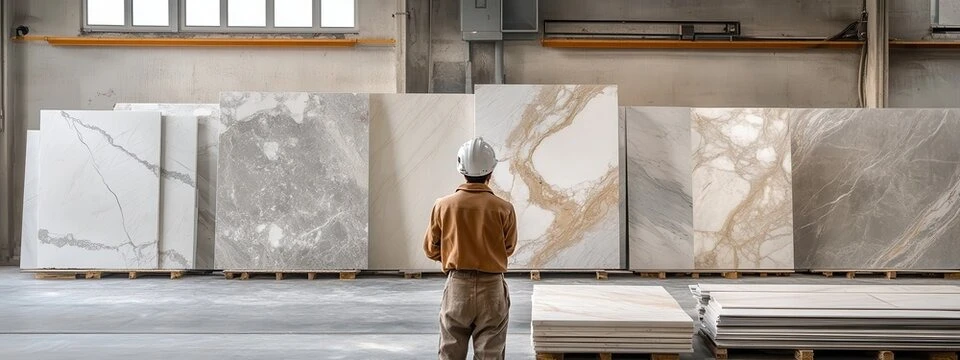
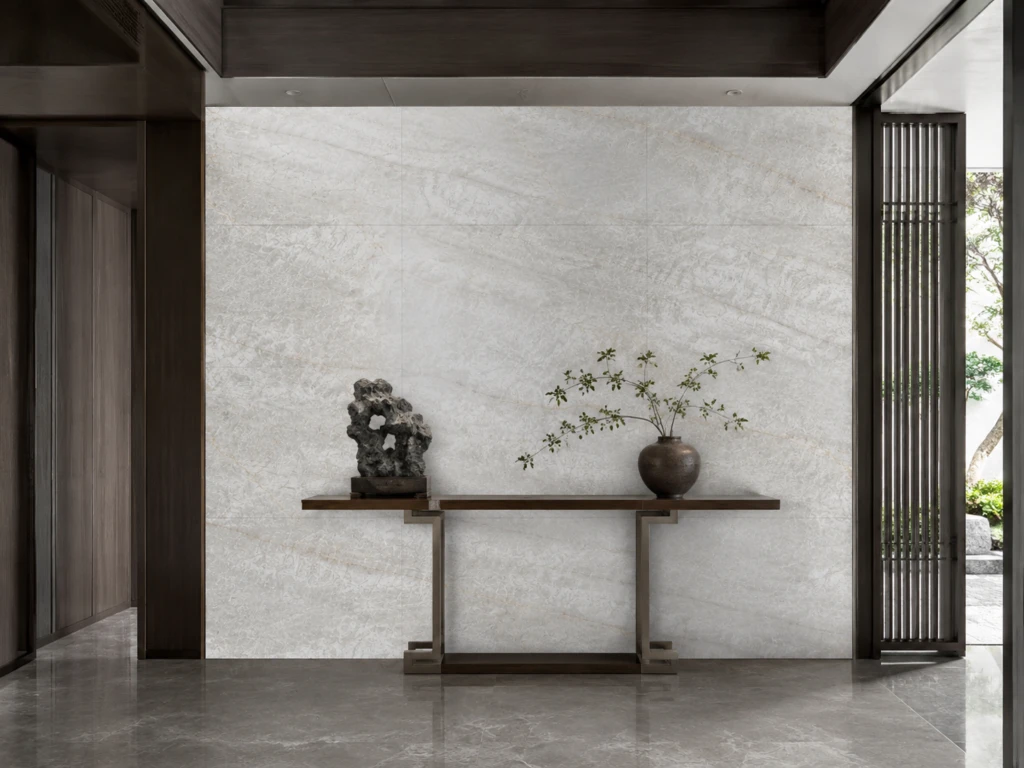
First, availability changes quickly by manufacturer and market. Whites, creams, greys, warm neutrals and marble-inspired designs are common directions. But darker colors, dramatic veining, pattern variants and finishes may be limited for a specific product line or region.
| Design decision | Approval evidence | Residential risk to control |
|---|---|---|
| Background tone | Physical sample viewed under the home’s lighting. | Warm or cool undertones may change beside cabinets, tile and paint. |
| Vein scale and direction | Full-slab image or physical large sample. | A small chip cannot show island-scale pattern behavior. |
| Pattern repeat | Number of design variants and proposed slab sequence. | Obvious repetition on waterfall islands, long runs or shower walls. |
| Finish | Actual polished, honed or matte sample plus care guidance. | Different finishes change color, fingerprinting, cleanability and scratch visibility. |
| Edges and seams | Fabricated mock-up for mitres, profiles or book/flow matching. | Surface printing or pattern depth may affect edge appearance. |
First, do not lock a design from a website image alone. Approve a physical sample, review the full slab and confirm the available batch before fabrication.
Cost Reality Check: Compare the Installed Package
First, there is no reliable universal percentage premium for silica-free quartz. Price varies by formulation, design, slab format, market, distributor, availability, freight, fabrication complexity and project timing.
| Cost component | Normalize before comparing | Questions to ask |
|---|---|---|
| Material | Same design tier, thickness, usable slab size, finish and number of slabs. | Is the quote for stock, special order or a minimum production run? |
| Slab yield and waste | Approved cut plan, pattern direction, defects, seams and spare material. | Does the pattern or available size require an additional slab? |
| Fabrication | Cut-outs, edge profiles, mitres, polishing, reinforcement and mock-ups. | Has the shop processed this exact product? |
| Installation | Delivery, access, templating, seam work, support and on-site adjustment policy. | What work will be completed in the shop versus on site? |
| Warranty and service | Coverage, registration, exclusions, replacement availability and claim route. | Who supports the homeowner if a product or fabrication issue occurs? |
First, compare the final installed package, not only the slab price. A small material difference can be outweighed by slab yield. Special fabrication, transport, installation access or the need for an extra slab.
Working With Fabricators: Approve the Process Before Cutting
First, do not assume that every silica-free product should be processed with the same tooling. Feed rates, adhesives or polishing sequence as conventional quartz. Specifically, require the fabricator to review the manufacturer’s current technical guidance and complete a test cut or edge sample when the material or detail is unfamiliar.
- Product experience: Has the shop fabricated this exact product or a technically comparable formulation?
- Tooling and parameters: What blade, feed rate, coolant, polishing sequence and edge support will be used?
- Cut-out and mitre control: What corner radii, reinforcement, joint and handling rules apply?
- Dust control: How will shop and on-site cutting comply with local exposure-control requirements?
- Mock-up: Can the fabricator provide a finished edge, seam or mitred sample before the slabs are committed?
- Warranty responsibility: Which issues belong to the slab supplier, fabricator and installer?
Residential and Commercial Specification: Same Product, Different Controls
| Control | Residential project | Commercial project |
|---|---|---|
| Decision team | Homeowner, designer/showroom, fabricator and installer. | Specifier, owner, contractor, fabricator, procurement and sometimes testing consultants. |
| Approval evidence | Physical sample, full slab, cut plan, edge mock-up and warranty. | Submittals, mock-ups, test matrix, batch plan, installation package and formal release. |
| Primary risks | Appearance, slab yield, household care, schedule, fabricator experience and warranty support. | Repeated areas, traffic, maintenance protocols, documentation, replacement phases and contract compliance. |
| Common mistake | Choosing from a small sample without confirming the full slab or fabrication details. | Assuming a material claim automatically satisfies the project specification or certification pathway. |
First, residential projects can use a lighter approval process. But they should not skip product identity, silica evidence, full-slab review, fabrication controls and written warranty terms.
Confirm the exact SKU and finish with our silica-free quartz for residential projects overview before sample or order approval.
Making the Call
First, silica-free quartz belongs on the residential shortlist when the exact product meets the design, application, budget and fabrication requirements. It should not be selected solely because of a marketing label, nor rejected because the current collection is smaller than conventional quartz.
The approval sequence is:
- define the application and destination requirements;
- verify the exact product and crystalline-silica claim;
- review TDS, SDS, warranty and care limitations;
- approve the physical sample and full-slab appearance;
- confirm fabricator process and dust controls; and
- approve the cut plan, batch and installation package.
Need help reviewing a silica-free surface for a residential project?
Request current samples, product files and application guidance from the AsiaQuartz team.
Browse Silica-Free Surfaces → Contact Our Team →
Related Reading
- Silica-Free Quartz Commercial Applications Guide
- Silica-Free Decorative Quartz Buyer Guide
- Silica-Free vs Traditional Quartz Comparison
- The Silica-Free Shift: 2024–2026
- Engineered Stone Ban Guide
How this article was prepared
- Regulatory boundary: Australia and U.S. worker-safety statements are based on official government sources reviewed through August 6, 2026.
- Performance boundary: category-wide heat, stain, scratch, durability and cost figures were avoided; the guide requires product-specific data and samples.
- Application boundary: wet-area, exterior, food-contact, VOC and warranty suitability must be confirmed for the exact SKU and installation system.
- Limitations: this article is a specification guide, not medical, occupational-hygiene, legal, laboratory or installation advice.
Information status: Reviewed through August 6, 2026.
Sources and references
- Safe Work Australia — engineered stone ban and definition
- Australian Border Force — engineered stone import prohibition
- OSHA — crystalline silica overview
- OSHA — engineered-stone fabrication and installation inspection initiative
- NIOSH — silica exposure assessment
First, Information status: Regulations, product formulations, collections, test methods, prices and application approvals can change. Verify the exact SKU and project with the manufacturer, fabricator, installer and relevant local professionals.
FAQ
First, an intact installed surface does not normally create respirable dust. The occupational exposure concern arises when materials are cut, ground, drilled or polished. For indoor-air, VOC, food-contact or other project requirements. Review product-specific documentation rather than relying only on the silica-free label.
First, it can, depending on the mineral and resin system, print technology, finish and design library. Some products closely resemble conventional quartz; others have a different background, translucency, vein depth or edge appearance. Specifically, approve the physical sample, full slab and fabricated edge.
First, only when the manufacturer approves the exact product for exterior UV and weather exposure and the installation system is designed for that use. Many resin-bound surfaces are intended for interior applications, so do not assume outdoor suitability.
First, the decision can include regulation, worker-exposure reduction, design, availability, price, fabricator capability and the client’s procurement policy. Conventional quartz may remain legal in some markets, but cutting silica-containing stone still requires effective dust controls.
First, there is no universal service-life promise for the category. Durability depends on the product, installation, support, seams, heat and impact exposure, cleaning and repair history. Specifically, review the written warranty and care guide for the exact product.