Prepared by: AsiaQuartz Editorial Team
Technical review by: AsiaQuartz Product, QC & Supply Chain Team
Last updated: July 2026
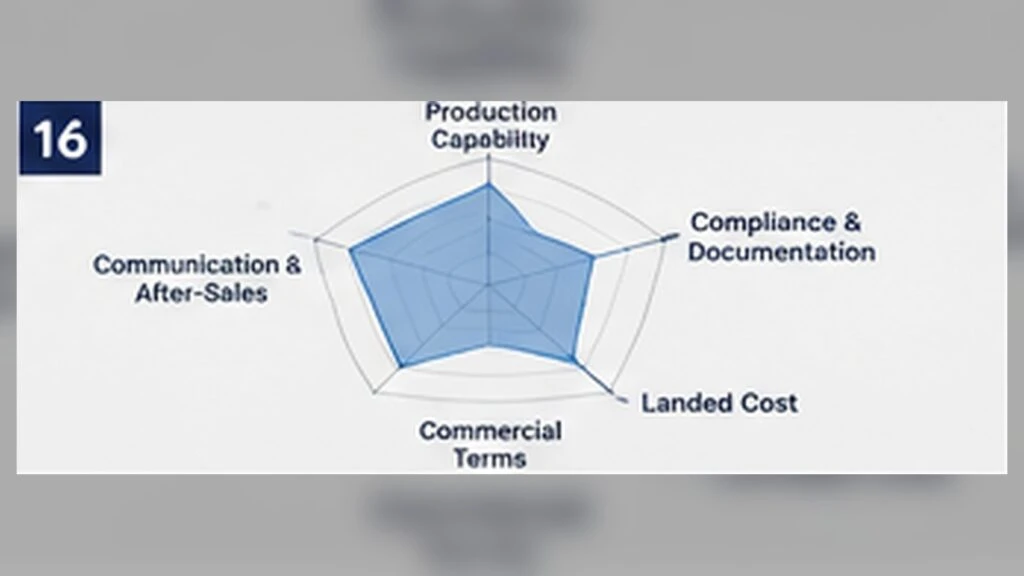
First, to compare quartz slab suppliers fairly, use the same five evidence categories for every candidate: production capability. Compliance and documentation, logistics and landed cost, commercial terms. And communication and after-sales support. First apply mandatory gates for product fit, origin clarity and required documents. Then score the remaining suppliers. Do not rank factories by FOB price alone.
First, cross-market sourcing has become more complex. Existing U.S. antidumping and countervailing duty orders on quartz surface products from China remain in place following the 2025 sunset review. Specifically, separately, the U.S. International Trade Commission completed a global safeguard investigation in 2026 and sent remedy recommendations to the President. In particular, importers should verify the current official status before relying on any duty assumption. Because a Commission recommendation is not the same as an implemented presidential measure.
First, the practical problem is broader than tariffs. A supplier in China, Vietnam, India. Turkey or another production market may quote a visually similar slab while using a different format. Specifically, test method, packing design, origin route, Incoterm or quality-control process. If the comparison method changes from one supplier to another, the result is not a supplier comparison—it is a collection of unrelated claims.
First, this guide provides a reproducible method for comparing quartz slab suppliers across countries. It is designed for importers, distributors, fabricators and project procurement teams purchasing full slabs by the container. Specifically, it is not a supplier directory or a country ranking.
Use two stages, not one score
First, Stage 1 — Mandatory gates: confirm the requested product can be manufactured. The tested product matches the quoted SKU, the intended origin route is documented. And destination-market requirements can be met.
Stage 2 — Comparative score: score only the suppliers that pass the mandatory gates. A high total score must never compensate for an unresolved product, compliance or origin issue.
The Five-Dimension Quartz Supplier Evaluation Framework
1. Production Capability and Product Match
First, equipment matters, but equipment branding alone does not prove product quality. The objective is to verify that the supplier can repeatedly manufacture the exact slab format. Specifically, thickness, finish, pattern and quantity you intend to order.
| Evaluation Question | Useful Evidence | Concern or Follow-Up |
|---|---|---|
| Can the actual plant produce the requested slab size, thickness and finish? | Product-specific format list, current production photos, line identification, and a written statement separating regular production from special-order capability. | “Any size is possible” without press, mould, calibration or MOQ details. |
| Does the color reference translate into a controlled production target? | Approved sample process, full-slab image review, pattern scale, vein direction, tone tolerance and batch approval rules. | Catalogue images used as the only approval reference, or no process for sample-to-batch comparison. |
| Can the supplier allocate capacity for the required order window? | Current production lead time, available production slot, planned line and realistic order schedule. A capacity range is acceptable when exact utilization is confidential. | Lead time given without sample approval, material availability or production-slot assumptions. |
| How are non-conforming slabs identified and controlled? | Defined inspection stages, quarantine or segregation process, disposition records and buyer-notification rules. | “Zero defects” or no documented way to isolate, rework, downgrade or reject a non-conforming batch. |
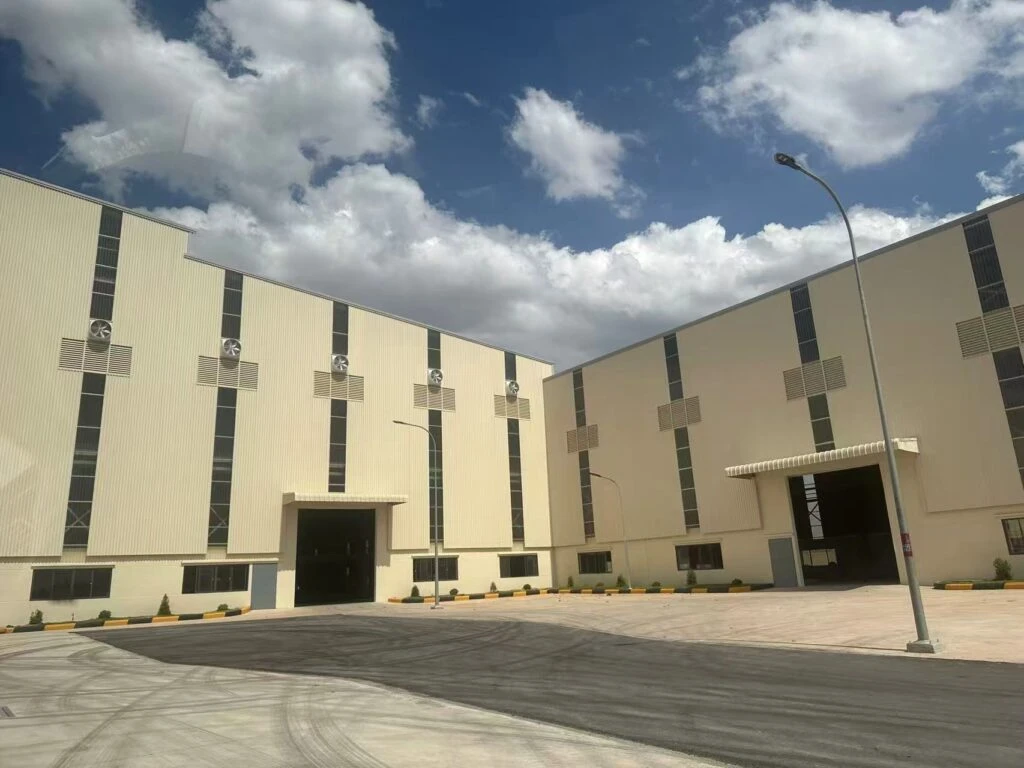
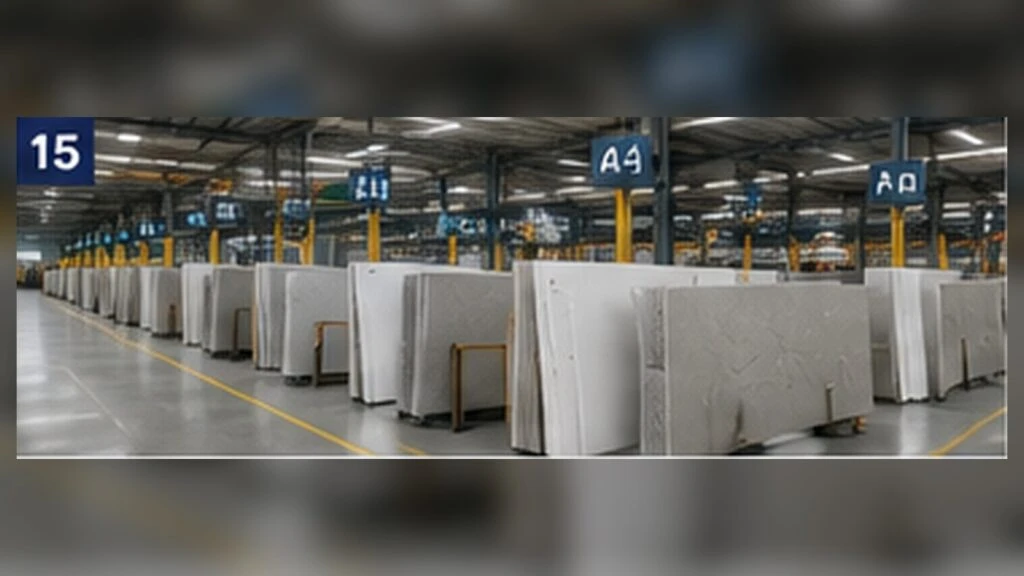
First, request a live or time-stamped walkthrough when factory identity matters. The walkthrough should show the production address, active line, raw-material area. Specifically, curing or storage area, QC station and finished goods. A trading company can still be a capable supplier. But it should disclose which plant will manufacture the order and who controls QC, packing and claims.
For detailed slab formats and thickness options, use the dedicated Quartz Slab Sizes & Dimensions page rather than accepting a generic “standard jumbo” description.
2. Compliance, Test Evidence and Origin Documentation
First, do not ask only whether a product is “compliant.” Ask which requirement applies. Which product was tested, which method and edition were used. And whether the report covers the quoted SKU, thickness, finish and production site.
- Product specification sheet: nominal slab dimensions, declared tolerances, finish, composition description and product-specific performance data.
- Test reports: report number, laboratory, accreditation status where relevant, method and edition, sample identity, result, date and coverage.
- Crystalline-silica evidence: for silica-free or low-silica claims, request a product-specific quantitative mineralogical report stating the analytical method, sample preparation, reporting basis and detection or quantification limits. “XRD tested” by itself is not a complete result.
- Safety Data Sheet: the finished slab product, not only resin, pigment or aggregate inputs.
- Origin file: manufacturing address, process description, material-flow records, production records, Certificate of Origin where applicable and shipment documents that are consistent with the declared route.
Country of origin is transaction-specific
First, u.S. Customs and Border Protection applies substantial-transformation analysis case by case, based on the totality of the manufacturing facts. Specifically, do not assume that imported raw materials automatically disqualify a country of origin. And do not assume that polishing, repacking or a Certificate of Origin automatically establishes it. In particular, give the actual process description to your customs broker or trade counsel before ordering.
| Document | Strong Response | Follow-Up Needed |
|---|---|---|
| TDS and performance reports | SKU and plant are identifiable; methods and editions are stated; results match the quoted product. | Generic brochure values, no method, no sample identity or reports from an unrelated product. |
| Silica-content report | Product-specific quantitative result with method, reporting basis and laboratory details. | Marketing statement only, an elemental XRF result presented as crystalline-silica content, or no limit of detection. |
| Origin evidence | Process map and production records are consistent with the declared manufacturing site and shipment documents. | Only a blank certificate template, unexplained third-country processing or inconsistent factory and exporter names. |
| Change control | Supplier identifies changes that trigger buyer notification, report review or revalidation. | No link between formulation, production line, report coverage and the current order. |
3. Logistics and True Landed Cost
First, fOB or FCA price is only one input. Compare suppliers using the same named place, Incoterms® 2020 rule, container assumptions, destination port and landed-cost boundary. For containerized cargo delivered to a terminal before vessel loading, FCA may be more appropriate than FOB; the agreed rule should match the actual handover point.

| Cost or Risk Input | What to Collect | Why It Changes the Comparison |
|---|---|---|
| Named delivery point | FCA factory or terminal, or FOB named port, including Incoterms® 2020. | Quotes using different handover points transfer cost and risk at different stages. |
| Inland transport | Factory-to-terminal distance, current truck quote, weight assumptions and validity date. | Distance alone does not provide a reliable cost; use a dated quote for the actual load. |
| Ocean service | Carrier options, direct or transshipment route, frequency, estimated transit range and free-time assumptions. | A lower origin price may be offset by longer or less predictable routing. |
| Packing and payload | Slab dimensions, thickness, net weight, rack or crate design, slabs per container and unloading method. | Different packing density changes freight cost per usable slab and damage exposure. |
| Duties and entry costs | HTS classification, origin, current trade-remedy treatment, brokerage, bond and inspection assumptions. | These inputs can change and must be verified for the specific entry. |
First, use the same landed-cost model for every candidate. The Quartz Slab Supply Chain Guide and Quartz Slab Weight & Container Loading Guide provide the supporting calculations and packing questions.
4. Commercial Terms and Contract Clarity
First, commercial terms should be compared as a package, not judged against a single “standard” deposit or MOQ. Terms vary by supplier history, credit risk, product, order size, banking capability and production schedule.

| Term | What to Confirm | Evaluation Point |
|---|---|---|
| Price and validity | Currency, unit, named Incoterm/place, validity period, taxes, packing and exclusions. | Can the quote be reproduced and compared without assumptions? |
| MOQ and mix | Minimum by color, finish, thickness and container; mixed-SKU rules; sample or trial-order route. | Does the MOQ reflect actual production planning, and does it fit your inventory strategy? |
| Payment | Deposit, balance trigger, banking details, L/C capability, document release and dispute process. | Are the terms proportionate to verification level and transaction risk? |
| Lead time | Starting event, sample-approval dependency, calendar or working days, packing and port handover. | Do all suppliers measure lead time from the same milestone? |
| Claims and remedies | Notice period, evidence, inspection rights, repair/replacement/credit options and exclusions. | Is there a written process, or only a general promise to “solve any problem”? |
5. Communication, QC Execution and After-Sales Support
First, evaluate communication during the RFQ and sample stages. The objective is not perfect English; it is accurate transfer of specifications, decisions and evidence.

- Response quality: Does the supplier answer the numbered question, identify assumptions and attach the requested evidence?
- Technical ownership: Can sales escalate questions to production, QC or documentation staff and return a consistent answer?
- Approval control: Are sample approval, batch approval and shipment release recorded in writing?
- Proactive reporting: Will the supplier share production, full-slab QC, packing and loading records without repeated reminders?
- Claims readiness: Is there a named contact, notice period, evidence list and response timeline?
Mandatory Gates Before Scoring
| Gate | Pass Condition | If Unresolved |
|---|---|---|
| Technical fit | Supplier confirms the exact or approved alternative specification in writing. | Do not compare the price as if it were the requested product. |
| Required documentation | Documents needed by the destination market and project are available or scheduled before order release. | Hold the supplier outside the shortlist. |
| Origin route | Manufacturing process and shipment route are sufficiently documented for broker review. | Obtain a written professional review before ordering. |
| Commercial identity | Contracting entity, receiving bank, factory, exporter and document issuer are understood. | Resolve entity and payment inconsistencies first. |
Quick-Compare Scorecard
After mandatory gates are passed, rate each dimension from 1 to 5. Record the evidence supporting each score. However, the total is a decision aid, not an automatic approval.
| Dimension | Supplier A | Supplier B | Supplier C | Evidence / Notes |
|---|---|---|---|---|
| Production capability and product match | ||||
| Compliance, tests and origin documentation | ||||
| Logistics and landed cost | ||||
| Commercial terms | ||||
| Communication, QC and after-sales | ||||
| TOTAL / 25 | Apply project-specific weighting only after documenting it. |
Common Supplier-Evaluation Mistakes
Comparing Different Specifications as if They Were Equal
First, a lower quote may use a different slab format, usable size, thickness tolerance, finish, pattern-control standard or packing method. Lock the specification and document every approved alternative.
Using Country as a Quality Grade
First, country affects logistics, trade treatment and document routes. It does not determine batch consistency, calibration or QC execution. Specifically, evaluate the plant, product and evidence.
Accepting a Sample as Proof of Batch Consistency
First, a sample demonstrates a possible appearance. Confirm how the supplier controls the production batch, full-slab review, sequencing, tone range and replenishment reference.
Comparing FOB Prices Without Matching the Incoterm and Cost Boundary
Normalize the named place, container assumptions, packing, inland freight, ocean routing, duties and entry costs before ranking price.
Scoring Before Resolving Critical Gaps
First, a score of 23/25 does not cure an unresolved origin route, unsupported silica claim or product mismatch. Use gates first, score second.
When to Use This Framework
This framework is most useful when you are:
- evaluating several qualified suppliers across one or more production countries;
- buying full quartz slabs by the container or for repeat projects;
- comparing different production, origin or logistics routes;
- entering a market with product-documentation, silica, customs or trade-remedy requirements; or
- building an approved supplier list for repeat purchasing.
Use an RFQ and Pilot Order to Validate the Shortlist
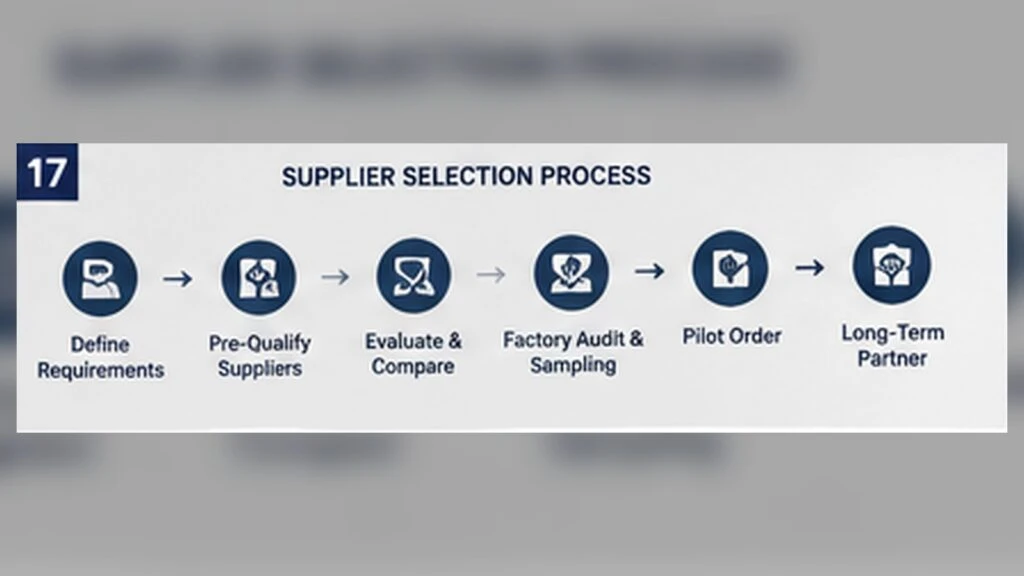
Once the framework produces a shortlist, send every candidate the same structured Quartz Slab RFQ Template. Then validate the strongest candidate with the least risky practical step appropriate to the project: approved samples. However, product-specific testing, a third-party factory audit, a small production trial, a mixed trial container or a full pilot container.
First, the pilot should test both the product and the operating process: document accuracy, sample-to-batch consistency. Production communication, dimensional QC, packing, loading records and claims handling.
Submit Your Sourcing Requirements →
Related AsiaQuartz guides
- Quartz Slab RFQ Template — turn this framework into numbered supplier questions.
- Quartz Slab Supplier Selection Guide — samples, factory review, specifications and supplier-fit fundamentals.
- Quartz Slab QC & Packing Guide — inspection evidence and packing controls before shipment.
- Quartz Slab Supply Chain Guide — landed cost, documentation, container planning and replenishment risk.
- Quartz Slab Sizes & Dimensions — standard, project-size and selected super-jumbo formats.
FAQ
First, only after confirming that the suppliers quoted the same product and the same cost boundary. For containerized shipments, verify whether FCA or FOB reflects the actual handover point, then calculate landed cost using the same assumptions.
First, request a live or time-stamped walkthrough tied to the current production site, verify the contracting and manufacturing entities. And use an independent factory audit when the order risk justifies it. A supplier may legitimately use partner factories. But the production route and QC responsibility should be disclosed.
First, not by itself. Origin analysis can depend on the actual manufacturing operations and applicable legal framework. Specifically, provide the process facts to your customs broker or trade counsel.
First, start with a manageable prequalified group—often three to six candidates—and expand only when the responses do not provide adequate market or capability coverage. Quality of evidence matters more than the size of the list.
First, use product-specific evidence and a controlled trial: testing, audit, production sample, trial batch or pilot container. Compare the process as well as the slabs.
How this article was prepared
- Framework design: based on B2B procurement controls used to compare product fit, documentation, logistics, commercial terms and operating reliability.
- Standards boundary: EN 14617 is a test-method series for agglomerated stone; EN 14618 covers terminology and classification. ASTM C97/C97M and C880/C880M are dimension-stone methods and should not be treated as automatically equivalent to agglomerated-stone methods.
- Trade and origin: official U.S. sources were used for the status of quartz trade proceedings and the case-by-case substantial-transformation principle.
- Limitations: this framework is educational and does not replace product-specific technical review, customs classification, legal advice, laboratory testing or contract negotiation.
First, Information status: Trade remedies, safeguard measures, customs treatment, freight routes and commercial terms can change. Verify the current transaction with the relevant customs broker, laboratory, carrier and legal or technical professionals.
Sources and references
- USITC — Five-Year Review of Quartz Surface Products from China, January 10, 2025
- USITC — Remedy Recommendations in the Quartz Surface Products Global Safeguard Investigation, May 5, 2026
- U.S. Customs and Border Protection — Substantial-transformation analysis is case-specific and based on the totality of circumstances
- ICC — Incoterms® 2020 FOB explanatory notes
- ICC Academy — FCA or FOB for containerized shipments
- ASTM C97/C97M — Absorption and bulk specific gravity of dimension stone
- ASTM C880/C880M — Flexural strength of dimension stone
- BS EN 14617-1 — Agglomerated stone test method for apparent density and water absorption
- BS EN 14618 — Agglomerated stone terminology and classification