
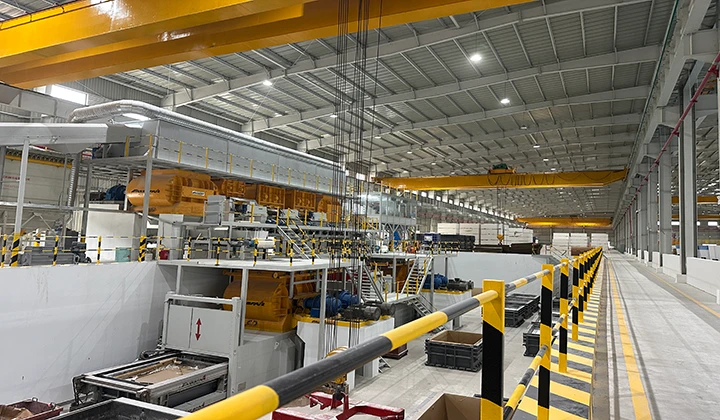
“Project orders fail differently than stock orders — and the cost of getting it wrong is measured in containers, not cartons. Over the past two years, we have watched hotel developers lose months to batch mismatches, contractors eat six-figure rework costs on mis-specified cut-to-size programs, and distributors scramble when their fabricator runs out of matching slabs three phases in. This guide is not a product brochure. It is the process we wish every project buyer had in hand before sending their first inquiry.”
Prepared by: AsiaQuartz Editorial Team
Technical review by: AsiaQuartz Product, QC & Supply Chain Team
Last updated: June 2026
Executive Summary
Quartz project supply is not the same as stocking slabs for general fabrication. When a hotel needs 300 identical vanity tops, a retail chain rolls out 40 stores, or a multi-family developer phases units across 18 months, the buying process must shift from “quote a color and quantity” to “plan a controlled supply chain.”
AsiaQuartz is built for this: a B2B quartz slab supplier from China and Vietnam, supporting printed quartz, engineered quartz slabs, silica-free surfaces, custom programs, QC verification, sample programs, container-level delivery, and project supply across importers, distributors, fabricators, builders, hospitality buyers, and commercial project teams. This guide walks through every decision point — from format selection and sample approval to batch matching, QC evidence, origin planning, and the information you need to send before any supplier can give you a real project quote.
📖 On-site resources: Review the Quartz Product Specifications page for available formats and dimensions, then explore Slab Inventory, Prefab Programs, and Cut-to-Size Projects based on your installation needs.
1. What “Project Supply” Actually Means in Quartz
In standard quartz procurement, a fabricator or distributor buys slabs by color, inspects them on arrival, and cuts to fit whatever countertop orders come in. The approach works — for general inventory.
Project supply is different. It is the end-to-end coordination of format, specification, production, QC evidence, packing, shipping, and replenishment against a defined scope: a hotel, an apartment building, a retail rollout, or a hospital wing. The defining characteristic is repeatability — the same dimensions, the same edge profile, the same finish, across dozens or hundreds of units, often in phases.
Consider three real scenarios:
- A fabricator buying standard slabs for walk-in countertop orders needs color availability and slab quality. If one slab has a spot defect, there are five more in the yard.
- A contractor supplying 300 apartment vanity tops needs every piece to land within tolerance, packed in installation sequence, with matching tone across all units. One wrong dimension or a batch color shift discovered at unit #200 is a crisis — not a reorder.
- A hospitality buyer sourcing a reception desk + wall panels + bar tops for a single branded hotel needs drawing review, surface consistency across different product formats, and QC photos before anything leaves the factory.
If your supplier treats all three of these the same way — same quote format, same process, same documentation — you are already in the danger zone. Project supply is not “standard procurement, just bigger.” It is a different supply chain, and suppliers who have not built their operations around it will cost you money in ways that show up months after the invoice is paid.
These are not three sizes of the same problem. They are fundamentally different supply chains. Project Supply Guides exists to give you the framework for the second and third — the ones where mistakes cannot be fixed with a reorder.
📖 AsiaQuartz product programs at a glance: Printed Quartz — for hotel, retail, multifamily, and distributor programs. Classic Quartz — for stock and repeat B2B orders. Cut-to-Size and Prefab — for builders, fabricators, hospitality buyers, and multi-unit programs.
2. Choose the Format — Then Lock the Specification
The single most expensive project mistake we see is simple: the buyer sends a quote request before deciding what format the project actually needs. Slabs, prefabs, and cut-to-size are not interchangeable — they serve different fabrication strategies, different timelines, and different risk profiles.
📖 AsiaQuartz standard specs at a glance: standard slabs — 3,200 × 1,600 mm (126 × 63 in); jumbo options up to 3,250 × 1,650 mm (128 × 65 in); 20 mm / 30 mm thickness. Prefab kitchen formats — 96 in / 108 in × 25 in + vanity combinations. Full spec sheets →
2.1 Format Selection: Slabs vs. Prefabs vs. Cut-to-Size
🔑 The 10-Second Rule
Slabs = flexibility for the fabricator. Prefabs = speed for repeat programs. Cut-to-size = control when drawings are final and the installation sequence matters. Pick the wrong one, and you are paying for fabrication capacity you do not have — or tolerances you cannot meet.
| Format | Best For | Typical Specs | Watch Out For |
|---|---|---|---|
| Full Slabs | Fabricators needing layout flexibility; general inventory; projects where cutting is done on-site | 3,200×1,600mm; 15/18/20/30mm; polished/matte/leather | On-site cutting quality varies; batch consistency across multiple slabs; requires skilled fabricator on the ground |
| Prefabs | Repeat kitchen programs; vanity packages; builder-grade multi-unit supply | Pre-cut to standard countertop sizes; 15/18/20mm; polished; basic edge profiles included | Limited size options; edge variety may be restricted; confirm packing sequence — wrong order = re-sorting on site |
| Cut-to-Size | Final drawings exist; repeat dimensions; hospitality; wall panels; retail interiors; room-by-room install | Custom dimensions per drawing; thickness per spec; cutouts + edge details; tolerance ±1mm | Requires locked drawings before production; tolerance must be written, not assumed; changes after production start are expensive |
| Printed Quartz | Branded commercial interiors; marble-look consistency; phased projects needing repeatable visuals | UV-printed on quartz base; Calacatta/Carrara/marble effects; 15/20mm | Batch records essential for phase matching; confirm print durability + UV stability; not all printed quartz programs support the same color gamut |
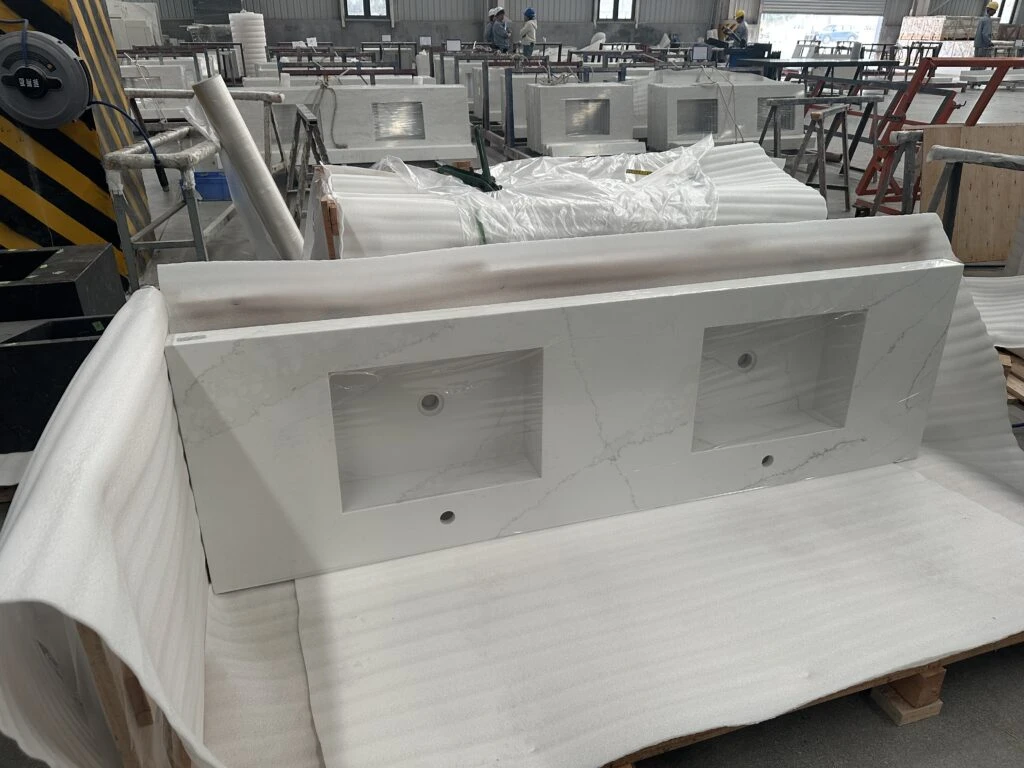
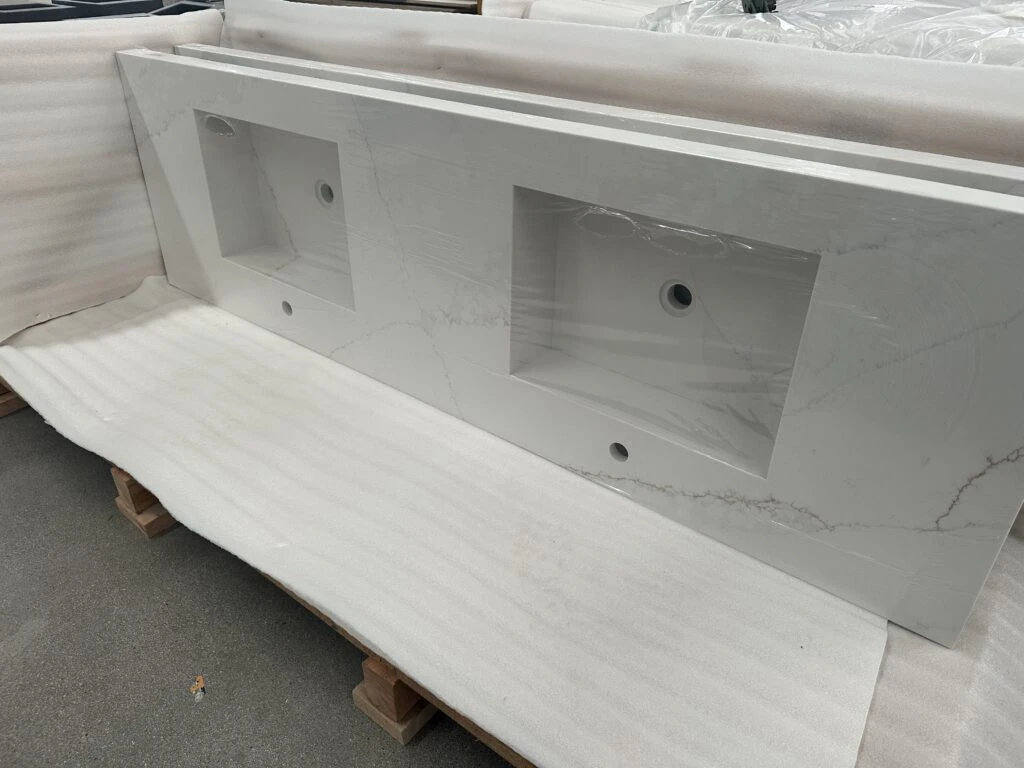
📖 Reference: Compare full specifications at Quartz Slab Specs, Prefab Programs, Cut-to-Size Projects, and Printed Quartz Slabs before preparing your format decision.
2.2 Lock the Specification — Before Production, Not After
The most expensive project errors do not begin on the factory floor. They begin with a one-line email that says “Calacatta, 20mm, 300 sqm.” Nothing about edge profile. Nothing about tolerance. Nothing about which direction the veining should run. By the time production starts, the factory has guessed — and the guess is almost always wrong in ways that are only visible at installation, when the installers are booked and the client is waiting.
I have learned this the hard way watching projects go sideways: the factory will not ask the questions you forgot to answer. They will fill in the blanks with their default assumptions — and their default assumptions were built for a different market, a different project, a different buyer. If you do not write it down, they will guess. And you will pay for the guess.
A project specification that protects the buyer should answer these questions before any deposit is placed. AsiaQuartz recommends that spec control cover size, thickness, tolerance, QC, and packing review before shipment — for project orders, buyers should provide drawings, cutouts, edge profiles, tolerances, packing sequence, and timeline:
- Product format (quartz slabs, quartz prefabs, cut-to-size quartz, printed quartz, or a mix across applications)
- Color code and finish (polished, matte, leather, or honed)
- Dimensions — slab size, countertop size, or custom cut dimensions per drawing
- Thickness — 15mm, 18mm, 20mm, or 30mm; confirm tolerance (e.g., ±0.5mm or ±1mm)
- Edge profile — eased, beveled, bullnose, ogee, or custom; confirm by photo or drawing reference
- Cutouts — sink, hob, faucet holes; confirm positions on approved drawings
- Vein direction — critical for marble-look and printed quartz; specify “book-matched,” “random,” or “directional”
- Quantity — by slab count, by unit count, or by square meter; include waste allowance (typically 10–15% for slabs, 3–5% for cut-to-size)
- Packing method — A-frame crating, pallet stacking, individual wrapping; confirm installation-sequence packing if phased
- Project timeline — production start date, phase schedule, delivery window, and any liquidated damages or penalty clauses
3. Sample Approval and Batch Control — Your Two Strongest Levers
If a project buyer gets two things right, most disasters are avoided before they start: (1) treating sample approval as a binding reference, not a formality, and (2) planning batch control before the project splits into phases.
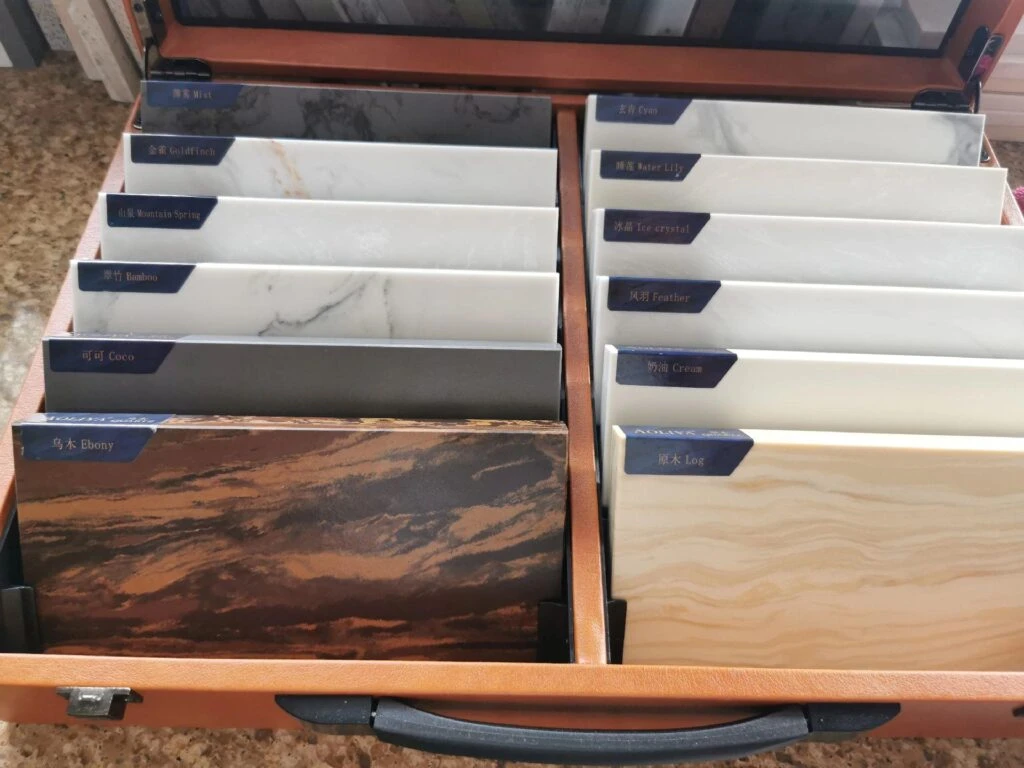
📖 AsiaQuartz best practice: approved samples should become the reference point for production, QC review, and sample-to-bulk matching — especially for printed quartz and repeat programs, where color consistency and vein repeatability are contractual requirements, not preferences.
3.1 Sample Approval: The Reference That Protects the Project
A small sample chip approved in an office under warm LED lighting does not tell you what 300 vanity tops will look like under hotel hallway lighting — unless the approval process is built to answer that question. Too many project buyers approve a sample that later turns out to represent only one possible tone from a batch range, with no agreement on what variation is acceptable.
A project-grade sample approval package should include:
- The approved color, finish, and thickness — recorded with a dated photo
- A statement on whether the approved sample represents a single batch snapshot or the expected range across production
- A clear definition of acceptable variation: tone range, vein density, pattern direction — not “close enough,” specific limits
- Confirmation of whether future phases must match the exact batch or only the same design family
- For printed quartz: a reference slab photo + batch records — commercial projects often need repeatable visuals across multiple shipments and phases
- Agreement on how bulk production will be compared to the approved sample — full-slab photos? side-by-side batch comparison photos? on-site inspection by a third party?
We have seen a hotel project sign off a sample at the design firm level, only for the contractor to reject 40% of delivered slabs because “the veins are running the wrong way.” The sample had no vein direction note. The purchase order had no vein direction note. The factory assumed random orientation. A two-sentence addition to the sample approval form would have prevented a six-week delay.
📖 For the full QC workflow, use the QC & Packing Guides as a companion reference. The sample-to-bulk comparison should follow the same evidence-first logic as pre-shipment inspection.
3.2 Batch Matching: The Phased-Project Time Bomb
“In my career, I have seen too many suppliers dismiss batch-to-batch color variation as a ‘natural characteristic of the material.’ In a project order, that is not natural — that is a failure. If your supplier shrugs off batch differences before the order is placed, stay on high alert. What sounds like a minor disclaimer during procurement becomes a six-figure remediation argument at installation.”
A project is almost never installed in one clean shipment. Hotels open in wings. Apartment buildings go floor by floor. Retail rollouts span quarters. If Phase One countertops are visibly different in tone or vein character from Phase Three — and the supplier was never asked to hold the batch — the problem surfaces at installation, not procurement. By then, the container is unpacked, the installers are on the clock, and the cost of replacement dwarfs the cost of the material.
📖 Batch matching is especially critical for AsiaQuartz Printed Quartz, which is positioned as a commercial project program for hotels, apartments, retail stores, reception desks, and commercial interiors — with jumbo slab sizes, batch matching controls, and repeat order programs designed specifically for phased commercial supply.
Before the first production run, get written answers to:
- How are batch references recorded and tracked — by lot number, production date, or color code?
- Can the same lot be reserved for all planned phases? If not, how close is the next available batch — and can you see comparison photos before committing?
- For repeat orders: will the supplier provide side-by-side batch comparison photos before every shipment?
- What is the lead time warning if the reserved batch is running low — and what is the backup plan (alternative batch, alternative color, alternative supplier)?
- Is batch traceability written into the purchase order as a contractual deliverable, or only discussed verbally?
⚠️ Red Flags — If You See These, Walk Away:
- ✗ Supplier says “same color, don’t worry” — with no batch number, no reference photo, no written commitment
- ✗ Batch reservation is verbal only — not written into the PO or sales contract. Verbal promises do not survive staff turnover.
- ✗ Supplier cannot provide side-by-side batch comparison photos before shipment — if they cannot show you, assume the batches do not match
- ✗ No process for notifying the buyer when a reserved batch is running low — meaning you find out when you place the reorder
- ✗ Supplier treats batch matching as a “nice to have” rather than a contractual deliverable — if it is not in the contract, it does not exist
🔄 Planning a Phased Commercial Project?
If your project has two or more installation phases, batch control should be a line item in your purchase order — not a verbal assurance. AsiaQuartz documents batch references, provides comparison photos per phase, and can reserve lots for confirmed project pipelines. Review the Supply Chain Guides and QC & Packing Guides to build batch control into your project plan before the first container is booked.
Contact AsiaQuartz with Your Project Scope →
4. QC Evidence and Origin Planning — Get It Before the Container Leaves
Once production starts, the buyer has exactly one window to catch problems: before the balance payment is released and the container is loaded. After that, defects, wrong labels, missing documents, or packing damage become exponentially harder — and more expensive — to fix.
📖 The AsiaQuartz QC & Packing Guides define pre-shipment control across surface, size, thickness, batch, packing, and loading checks before approval. Packing evidence should include wooden crate or A-frame confirmation, edge protection, labels, shipping marks, and container seal documentation.
Ask any project manager who has received a container with unreadable labels or undocumented damage: the money saved by skipping QC is a rounding error compared to the cost of on-site sorting, return shipping, and client delay penalties. QC is not overhead. It is the cheapest insurance policy in the project budget.
4.1 The Pre-Shipment QC Package
A project-grade QC evidence package should include, at minimum:
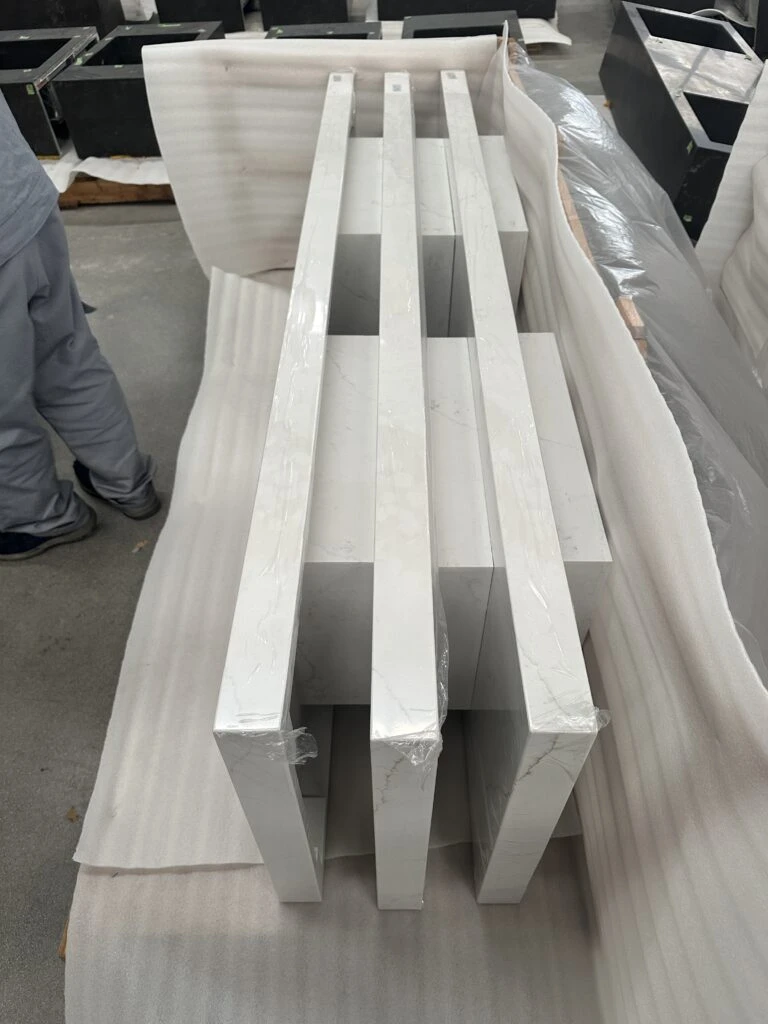
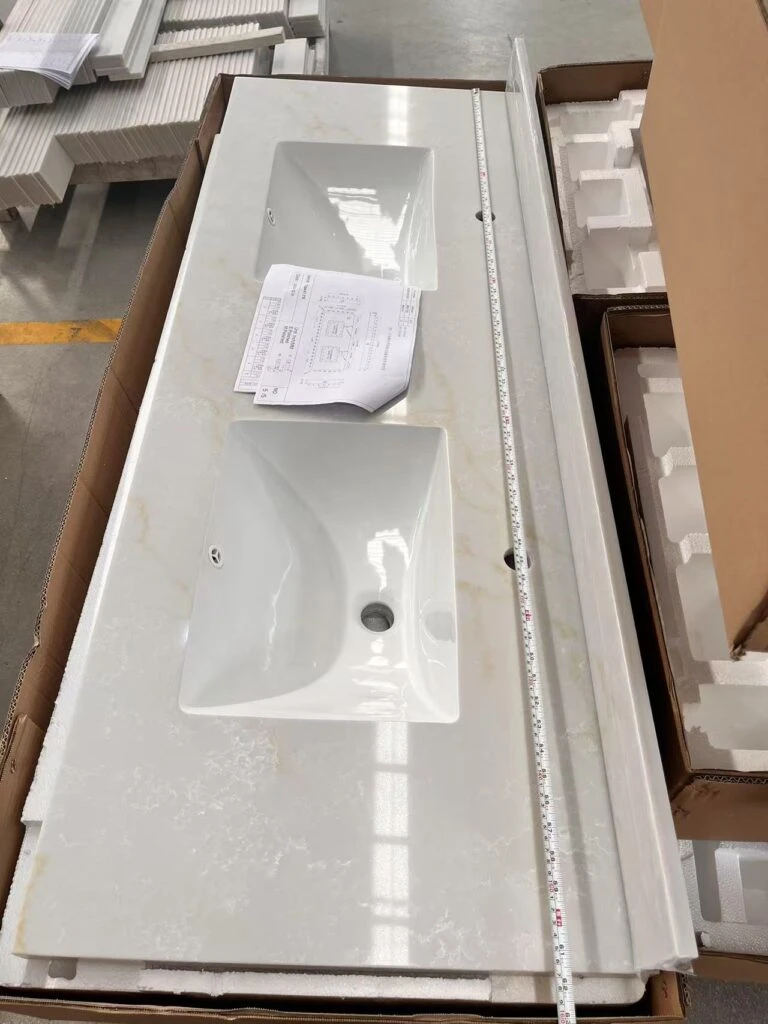
- Full-slab or full-piece photos — every piece, not a “representative selection.” Representative means “we picked the best ones.”
- Close-up photos of surface, edges, and any cutouts — at a resolution where defects would be visible
- Thickness verification — measured with caliper, photographed with the measurement visible
- Dimensional checks against approved drawings — ruler or tape measure visible in the photo
- Color and tone comparison against the approved reference sample — side by side, same lighting, same angle
- Batch comparison photos if multiple production lots are involved — place slabs from different batches next to each other
- Packing photos — individual wrapping, crating, labeling — taken after packing is complete, not before
- Label verification — each piece labeled with project code, unit number, room/floor reference, and destination
- Loading process documentation — staged before loading, loaded position, secured
- Final container photo with visible seal number — and the seal number documented in the shipping file
A project buyer once told us: “The slabs looked fine in the factory photos. When they arrived, half the labels were water-damaged and unreadable. The site team spent three days matching pieces to drawings.” The factory photos were taken before packing. The labels were paper, not waterproof. The packing method was never reviewed before shipment. Two small QC items — label material specification and post-packing photos — would have saved three days of on-site chaos and the labor cost that came with it.
📖 Companion resource: The QC & Packing Guides provide the full pre-shipment inspection workflow — use it as your checklist template for every project order.
4.2 Origin Planning: More Than a Customs Question
For project buyers, origin planning affects more than the customs declaration. It determines production scheduling, documentation requirements, lead time reliability, cost structure, and backup capacity if something goes wrong.
AsiaQuartz supports multi-origin and dual-origin quartz supply across China, Vietnam, and Thailand — with controlled quality, compliance documentation, pre-shipment QC evidence, and container-level delivery across every origin. The company runs its product development, QC, and production coordination from China headquarters, with Vietnam and Thailand available as alternative or supplementary origin options for selected programs. For buyers managing landed cost or supply continuity across a multi-year project, origin decisions should be made before the timeline becomes urgent — not retrofitted when the first delay hits.
📖 Compare route choice, landed cost, documentation, and replenishment planning using the Supply Chain page and Supply Chain Guides.
5. The Information Every Supplier Needs Before They Can Quote
A useful project quote depends on useful input. If a buyer sends only a color name and rough square meter estimate, the supplier has to fill in the blanks — and those assumptions are where project costs and timelines go off the rails. Before requesting pricing, package the following:
Buyer Profile
Importer, distributor, fabricator, builder, contractor, hotel procurement, or commercial project team. This determines pricing tier, documentation requirements, and support level.
Project Type & Scope
Hotel, apartment, multi-family residential, retail, restaurant, office, healthcare, or mixed-use. Number of units. Number of phases. One-time buy or repeat program. These affect production scheduling and batch strategy.
Product Format
Quartz slabs, quartz prefabs, cut-to-size quartz, printed quartz, terrazzo, or silica-free engineered stone. Mix of formats if the project includes different applications (e.g., slabs for kitchen islands + cut-to-size quartz for vanity tops).
📖 Site-specific selection logic: Silica-free and low-silica engineered surface options are relevant when the destination market or fabricator is planning around evolving workplace safety regulations — such as Australia, California, and UK compliance frameworks. Terrazzo fits decorative, hospitality, commercial, retail, and restaurant surfaces where aggregate visual character is part of the design brief.
Specifications
Color code, finish, slab dimensions or custom cut dimensions, thickness, edge profile, tolerance, vein direction (for marble-look and printed quartz), cutouts per drawing. Attach the drawings — do not describe them.
Quantity & Timeline
Number of slabs, number of units, or square meters. Production start date. Phase schedule. Installation windows. Delivery deadline at destination port.
Destination & Logistics
Country, port of discharge, inland delivery requirement, preferred packing method (A-frame, pallet, mixed), and any special document needs (certificate of origin, fumigation certificate, etc.).
QC Requirements
Sample approval process. Batch matching protocol. Required QC photos and reports. Inspection standard. Whether third-party inspection is expected and who pays for it.
The suppliers who push back on these questions — who say “just send the color and quantity, we will figure out the rest” — those are the ones you should be most careful with. A supplier who does not demand clarity before quoting is a supplier who will fill the vacuum with assumptions. And in project supply, assumptions are the most expensive line item.
📋 Download: Project Requirements Self-Check Template
Not every project is ready for a formal supplier quote — and sending an under-prepared RFQ often leads to inaccurate pricing, wasted time, and mismatched expectations. We have prepared a free Excel checklist that mirrors the framework in this guide: format selection, specification lock, sample approval readiness, batch planning, QC requirements, and the full information package a supplier actually needs.
Download the AsiaQuartz Project Requirements Self-Check Template and review your project against the same checklist our supply chain team uses to vet incoming inquiries. It takes 10 minutes — and it surfaces gaps before they become expensive.
Download the Self-Check Template (Excel) →
Get Your Project Reviewed
AsiaQuartz is built for B2B buyers who need controlled quartz supply — not retail browsing. The company connects product selection, specification review, sample approval, QC visibility, origin planning, and container-level coordination across quartz slab, prefab, cut-to-size, printed quartz, silica-free surface, and terrazzo programs.
Planning a hotel, apartment, retail chain, commercial interior, or multi-unit quartz project? Send your drawings, target color, product format, quantity, destination port, and timeline — and the AsiaQuartz team will review sample options, project specifications, QC requirements, packing method, and supply planning. You can also request quartz samples, pricing, production lead times, origin planning support, QC files, and container-level coordination directly through the channels below.
Contact AsiaQuartz for Project Supply Review →
📖 Continue exploring: Product Specs · Supply Chain · Printed Quartz · Silica-Free Surfaces · Cut-to-Size Projects
FAQ: Quartz Project Supply
Quartz project supply is the planned sourcing of quartz materials against a defined project scope — a hotel, apartment building, retail chain, or commercial interior. It covers format selection, specification lock, sample approval, batch control, production, QC evidence, packing, shipping documents, and phase-by-phase delivery coordination. It is not the same as buying slabs for inventory.
Full slabs maximize fabrication flexibility — best when the fabricator is doing all cutting and edge work on-site. Prefabs work well for repeat kitchen and vanity programs where standard sizes apply. Cut-to-size quartz is the right choice when final drawings exist, tolerances are tight, and the installation sequence matters — think hotel vanities, reception desks, and wall panels. If the project needs marble-look consistency across phases, review printed quartz options.
Everything in the specification checklist (Section 2.2). At minimum: product format, color, finish, dimensions, thickness, edge profile, tolerance, cutouts per drawing, quantity with waste allowance, packing method, and project timeline. The approved sample should be photo-documented and dated. Batch control must be written into the purchase order — not discussed verbally.
For stock orders, a sample is a color reference. For project orders, the approved sample becomes the binding reference for color tone, pattern direction, finish, edge behavior, and batch comparison across every delivered piece. If the bulk production does not match, the project has a contractual claim — but only if the approval terms were specific enough to define what “match” means.
Use approved reference samples with documented acceptable variation ranges. Request batch numbers in writing. Reserve the same lot for all confirmed phases where possible. Require side-by-side batch comparison photos before each shipment. Build batch traceability into the purchase order — a verbal promise does not survive staff turnover. If the project spans more than 6 months, discuss batch reservation lead times and backup options before the first phase ships.
A complete pre-shipment QC package: full-slab or full-piece photos of every piece, close-up surface and edge photos, thickness verification with visible caliper measurement, dimensional checks against drawings, color comparison against the approved sample (side by side), batch comparison photos, packing photos with visible labels, loading documentation, and the final container photo with seal number. Review everything before approving the balance payment.
Cut-to-size quartz is better when drawings are final, dimensions repeat across many units, tolerances are tight (±1mm or less), and on-site fabrication capacity is limited or non-existent. Common applications: hotel vanities, reception desks, wall panels, retail counter runs, restaurant tabletops, and commercial restroom programs. It also simplifies installation sequencing — pieces arrive labeled and packed in install order.
Origin affects production scheduling, documentation, lead time reliability, landed cost, and backup capacity. If a project runs across multiple years or has tight delivery windows, origin should be planned before quoting. AsiaQuartz coordinates production from China (headquarters) with Vietnam and Thailand available as alternative or supplementary origin options for selected programs.
A complete project quote package includes: buyer type, project type and scope, product format, full specifications with drawings, quantity and timeline, destination port and logistics preferences, QC requirements, and batch matching protocol. The more you define upfront, the more accurate the quote — and the fewer expensive surprises during production.
AsiaQuartz structures its supply model for B2B project buyers: specification review, sample approval management, batch reservation, pre-shipment QC evidence packages, origin planning across China, Vietnam, and Thailand, and container-level coordination. The company covers quartz slabs, quartz prefabs, cut-to-size quartz, printed quartz, silica-free surfaces, and terrazzo programs — each with documented QC and supply chain workflows.