By AsiaQuartz Editorial Team
Technical review by AsiaQuartz Product, QC & Supply Chain Team
Updated: June 2026
First, ask a designer which quartz color to pick and you’ll get an aesthetic answer. Ask a distributor which colors to stock and you’ll get a very different one — because for a B2B buyer, color selection is a market-data problem with supply-chain consequences. Specifically, the wrong color family ties up your working capital in slow-moving slabs; the right one turns your container into a reorder machine.
First, we’ve watched color preferences shift across markets for years — which whites take off in Australia. Which greys carry the US multifamily market, which marble-looks sell in the Middle East. And which colors quietly die on the warehouse floor everywhere. In this guide we turn that experience into something a buyer can actually use. Specifically, we’ll break down the color families that matter, what different regions are buying in 2026, how pattern consistency affects your QC. And how color choice changes your cost and supply planning.
Knowledge Tree — Skip to What You Need
- The color families that matter in 2026
- Regional preferences: what sells where
- Application fit: color by project type
- Pattern consistency & batch management
- How color choice affects cost & supply
- FAQ
The Color Families That Matter in 2026
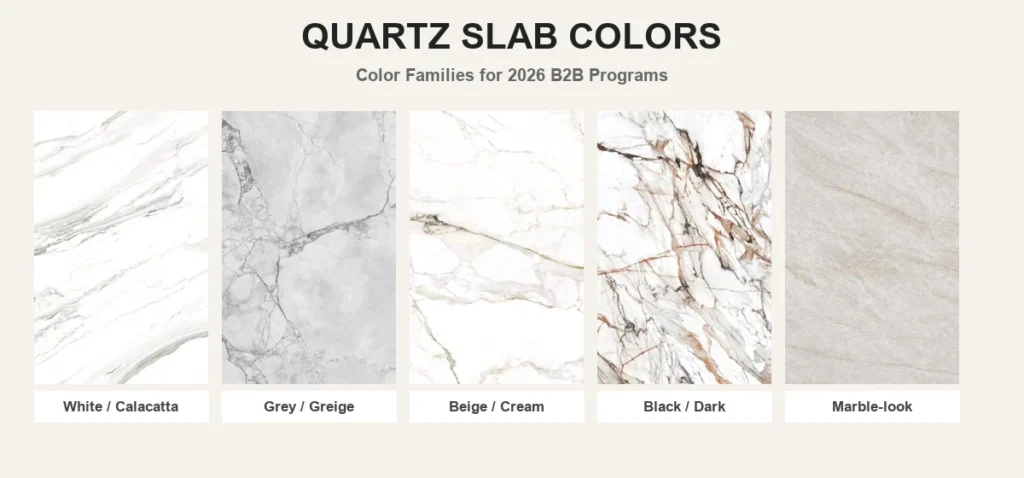
First, quartz color ranges fall into a handful of families, and each one has a different demand profile. If you’re building a program, you’re basically choosing which families to back. Specifically, here’s the 2026 landscape:
| Color family | What it looks like | 2026 demand profile |
|---|---|---|
| White & Calacatta marble-look | Bright white bases with grey or gold veining; Calacatta, Statuario, Bianco styles | Persistent global favorite; strongest in residential and hospitality; the premium anchor of most programs |
| Grey & greige | Solid and lightly veined greys; warm greige blends | Workhorse of multifamily and commercial; consistent demand across regions |
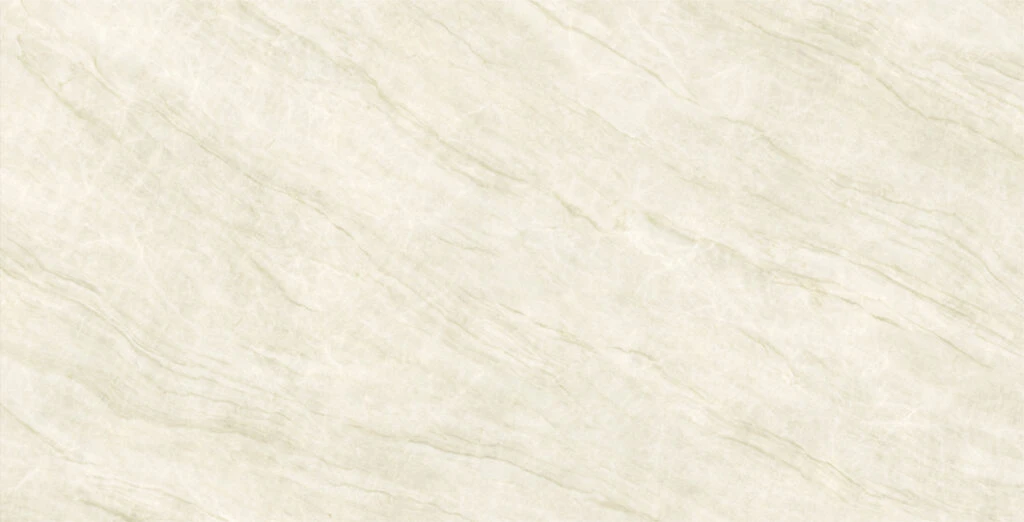
| Beige, cream & warm stone | Warm neutrals, travertine-look, sandy tones | Strong in Middle East and parts of Europe; growing in US warm-neutral trend |
| Black & dark tones | Deep blacks, charcoal, dark grey with subtle veining | Steady niche; bars, statement kitchens, luxury bathrooms; darker colors can show polishing differences |
| Terrazzo-look | Aggregate chips on light or coloured bases | Design-forward trend; strong in commercial and hospitality; growing in residential |
| Cement & industrial | Concrete-look, matte finishes, raw aesthetics | Urban commercial, offices, retail; steady rather than explosive |
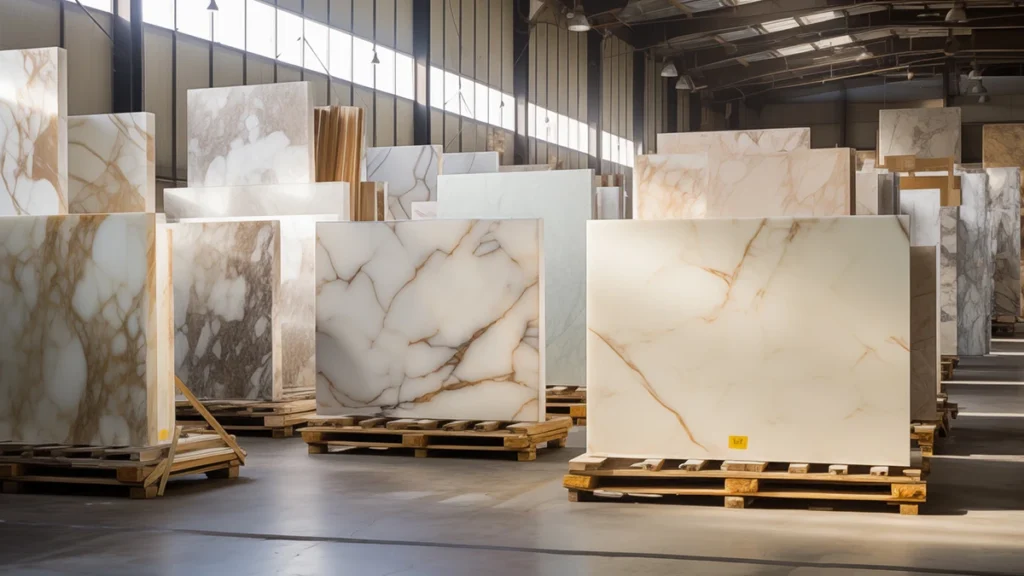
First, one pattern stands out: the market is splitting into “safe neutrals” (white, grey, greige) that carry volume. And “statement designs” (Calacatta marble-look, terrazzo, dark tones) that carry margin. In our experience, the buyers who do best run a portfolio — a deep inventory of proven neutrals plus a rotation of statement designs that they test in small quantities. On the other hand, the buyers who struggle are the ones who bet the whole container on one design they personally liked.
Regional Preferences: What Sells Where
First, color preference is genuinely regional, and it changes over time. Here’s the 2026 snapshot based on our supply coordination and market observation — use it as a starting point, then verify against your own sell-through data.
United States
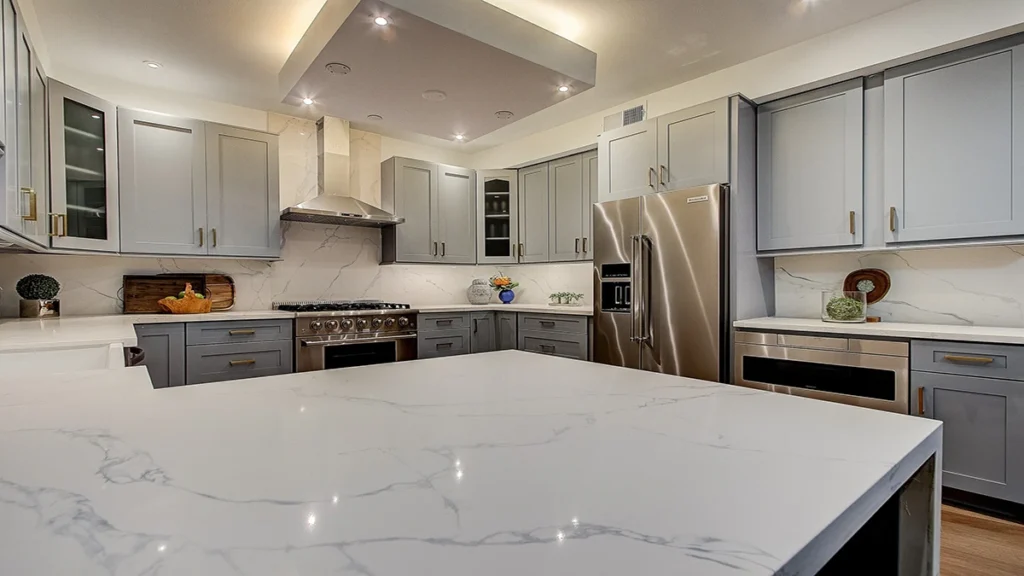
First, the US market is white and grey dominant, with a strong Calacatta/Statuario marble-look premium segment. Warm greige has been growing as an alternative to cool grey in residential. Specifically, multifamily and builder programs lean heavily on consistent, mid-price whites and greys that repeat reliably across phases. Dark colours and terrazzo sell to hospitality and statement residential projects.
Australia & New Zealand
First, aNZ buyers skew strongly toward bright white and light marble-look surfaces — the market’s light-and-bright aesthetic is hard to overstate. With the engineered stone ban reshaping what can be sold, silica-free and low-silica white marble-look designs are a major focus. Specifically, whites that stay bright under Australian light sell; anything that reads yellow or busy does not.
Middle East
First, beige, cream, and warm stone tones remain the regional anchor, alongside white marble-look for luxury residential and hospitality. Gold veining on Calacatta-style designs performs strongly. Moreover, the market is more accepting of bold veining than North America.
Southeast Asia
First, white and light grey dominate urban residential and commercial projects. Marble-look is popular for hospitality; terrazzo and cement-look are growing in cafes, retail, and co-working. Specifically, price sensitivity is higher, so value-line whites and greys carry much of the volume.
Europe
First, europe is the most design-diverse market: strong demand for natural stone-look, subtle veining, matte and textured finishes. And increasing terrazzo and cement-look adoption. Specifically, warm neutrals and greige do well; the market is generally more willing to experiment with non-white designs than North America.
First, a caution we give every buyer: region-level preferences are a starting point, not a substitute for your own sales data. If your market is a niche segment (senior living, student housing. A specific hospitality brand), your color mix will differ from the national pattern. Therefore, track what actually sells and rebalance quarterly.
Application Fit: Color by Project Type
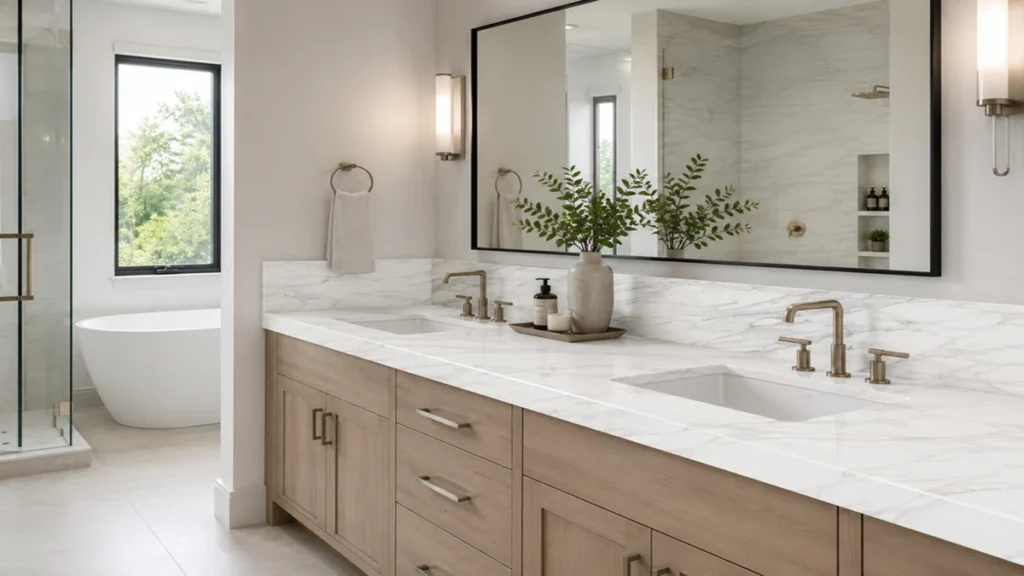
Before you match colors to applications, pair the color decision with the format decision. Quartz standard slab thicknesses are 20 mm (3/4 in) and 30 mm (1-1/4 in); 12 mm and 15 mm are special-use thicknesses produced for applications such as backsplashes. However, importantly, marble-look (printed / faux-marble) slabs come in 20 mm and 30 mm only. So if a market is asking for a thin-format backsplash in a marble-look design, that’s a narrower product question than “what colors sell” — and it changes which designs are even available. Specifically, standard large-format supply is typically the regular super-jumbo size. Approximately 3200 × 1600 mm (127 × 64 in), with project sizes and larger formats available by arrangement. In particular, keep the color family and the format plan on the same spreadsheet. Or you’ll approve a color that can’t ship in the thickness your project needs.
First, beyond region, the application decides which color families work. This is where our printed quartz guide and the pattern-selection approach come in — for decorative quartz specifically, the design-direction logic is covered in depth there. For the full product range, here’s the application-level map:
- Single-family kitchens: White and Calacatta marble-look lead; grey and greige follow. Veining should stay moderate — heavy veining reads “commercial” to many residential buyers.
- Multifamily & builder programs: Consistency is everything. Solid whites, light greys, and subtle greige repeat best across phases. Choose designs with tight batch tolerance.
- Hospitality (lobbies, bars, restaurants): Statement designs win — bold marble-look, dark tones, terrazzo. Durability and easy replacement matter; keep an extra slab or two per design for repairs.
- Offices & retail: Cement-look, grey solids, and subtle veined neutrals fit the contemporary workplace; terrazzo adds the design-forward touch in reception areas.
- Healthcare & clean environments: Pure white and light grey solids dominate for the clean-room aesthetic; non-porous surfaces and consistent appearance across large areas matter more than pattern.
- Bathrooms & vanities: Marble-look and white carry the premium look; darker tones work in statement bathrooms but show water spots more in some finishes.
The rule of thumb: sell the application, not the color. A buyer who tells you “I need Calacatta” usually means “I need a marble-look that reads premium in a kitchen” — and that’s a different product decision than “I need the exact design the showroom next door carries.”
Pattern Consistency & Batch Management
First, color selection doesn’t end at the catalog page. The difference between a great color program and a warehouse full of complaints is pattern consistency — how closely slabs of the same design match each other, across batches and across orders.
Why pattern consistency depends on production discipline
For manufactured quartz, pattern consistency is a function of production discipline: the recipe, the pigment dosing, the pressing parameters. And the finishing line. A supplier with documented batch controls can match a repeat order to the approved sample with reasonable confidence — which is why we always tell buyers to treat the physical sample or full-slab reference as a contract document, not a marketing artifact. However, keep the approved sample, record the product code and version, and specify both in the PO.
The practical cost of skipping consistency checks
First, the practical consequences of skipping this: slabs from different production runs side by side on a jobsite can show tone shifts that read as defects — even when each slab individually matches “the color.” For multi-phase projects, this is the #1 source of color complaints we see. Buyers who manage it well do three things: approve against a full-slab reference (not just a chip), request batch production planning so one phase isn’t split across unrelated runs. And retain reference slabs for later top-ups. Our QC & packing guide covers the visual approval process in practical checklist form.
Here’s something most guides won’t tell you
First, we’ve had importers lose a whole phase of a hotel project because they approved a 10×10 cm sample chip. And the full slabs came in with veining at three times the density. Specifically, the sample was technically “the same color” — and completely the wrong product for the buyer’s needs. Always approve against a full slab or at minimum a large representative piece. And get the factory to confirm the pattern scale in writing before production. It’s a five-minute conversation that saves a five-figure dispute.
How Color Choice Affects Cost & Supply
First, color isn’t just an aesthetic decision — it’s a cost and supply decision. Here’s how the color families behave on the procurement side:
- Volume colors are cheaper and faster: White and grey solids run in high volume across most factories, so they carry the best price points, shortest lead times, and deepest stock. If your program needs predictable supply, anchor it in volume colors.
- Statement designs cost more: Calacatta marble-look with realistic veining, terrazzo with complex aggregates, and specialty finishes require more process control and often lower production efficiency — expect a price premium and longer lead times.
- Stock depth varies by factory: A factory’s stock depth differs per design. Ask which colors are “always in stock” vs “made to order” before you plan container contents — it changes your lead time and flexibility.
- Discontinuation risk: Designs get discontinued when demand shifts or a line changes. If a project will need top-ups over years, pick a design the supplier confirms will stay in production, or order a surplus upfront and keep reference slabs.
- Custom colors are a different process: If you’re building a private-label color program, expect minimum order quantities, development lead time, and batch-control commitments. See our private label guide for how that works.
First, the procurement formula we recommend: roughly 70–80% of your container in proven volume colors with deep stock, 20–30% in statement designs you’re testing. Rebalance quarterly based on sell-through. Specifically, that keeps working capital moving while you develop the higher-margin segment.
FAQ
First, white and Calacatta marble-look lead globally, with grey and greige carrying commercial volume. Regional mixes differ — warm tones dominate the Middle East, bright whites dominate ANZ, and Europe is the most design-diverse market.
Most successful programs run both: deep neutral inventory for volume and a rotating test of statement designs for margin. Betting the container on one design you personally like is the classic mistake.
First, approve against a full-slab reference, record product code and version in the PO, request batch production planning for multi-phase projects. And retain reference slabs. Specifically, documented batch controls on the supplier side make repeat matching possible.
First, often slightly, and they can show polishing differences more visibly. The bigger cost drivers are design complexity (veining, aggregates) and production efficiency, not the color itself.
First, yes, through private-label development — but expect MOQs, development lead time, and batch-control commitments. It’s a program decision, not an order decision.
First, i wish more buyers asked this. Quarterly, against real sell-through data — not intuition. Specifically, regional trends shift faster than most people expect, and stale inventory is the most expensive color mistake there is.
Building a color program for your market?
First, tell us your target region and project mix — we’ll share current demand signals across color families, including which designs have deep stock and which need lead time. So your first container matches your market. Request a color portfolio review →
How This Article Was Prepared
- Regulatory and policy information: Summarized from publicly available legislative texts, regulatory announcements, and government agency publications as of August 2026. Source documents are cited in the article body where referenced.
- Industry context: Market observations and regional demand analysis are based on AsiaQuartz’s operational experience coordinating quartz supply across North America, Australia, the Middle East, Southeast Asia, and Europe, plus publicly available industry data. Regional color preferences are directional market observations, not statistical studies.
- Limitations: This article provides general business and educational information. It is not legal, customs, regulatory, or occupational-health advice. Color demand varies by market segment and changes over time; buyers should verify against their own sell-through data.
About This Article
First, this article was prepared using current public information from government agencies, industry organizations, research institutions, trade publications, and other cited sources. AsiaQuartz-specific product and supply information was reviewed against the AsiaQuartz Single Source of Truth (SSOT). Specifically, external sources are used for market context and do not independently verify AsiaQuartz capabilities. Research and drafting tools may assist with source collection, structure, and language review. In particular, final claims, sources, and AsiaQuartz-specific information are reviewed before publication.
Information Status
First, based on publicly available information reviewed through August 15, 2026. Regulations, tariff treatment, customs classification, product availability, production routes, and commercial terms may change. Specifically, buyers should review the specific transaction with the relevant professionals and authorities. A small sample does not represent every characteristic of a full slab or every permitted production variation. Actual specifications should be confirmed through product-specific technical files and written order documents.
Sources and References
- AsiaQuartz SSOT, v1.1, last reviewed August 2026 (product specifications, packing reference, internal link registry)
- AsiaQuartz supply coordination records, regional color demand observations, 2024–2026
- Industry trade reporting on surface material trends, accessed August 2026
- Safe Work Australia, engineered stone ban and workplace exposure materials, accessed August 2026 (ANZ market context)