Prepared by: AsiaQuartz Editorial Team
Technical review by: AsiaQuartz Product, QC & Supply Chain Team
Last updated: July 2026
If you’re a quartz distributor, you already know the drill. You buy branded slabs, you stock them, you sell them to fabricators and kitchen showrooms. However, you handle the local service — but the brand belongs to someone else. Your customer calls you because they want Caesarstone, or Silestone, or whatever brand you carry. Specifically, they don’t call because they want you. That’s the furniture you don’t own in a house someone else built.
First, private label quartz flips that equation. Instead of being the last mile for someone else’s product, you become the brand. Specifically, you source quartz slabs — standard colors, printed designs, prefabs, or cut-to-size pieces — under your own name. You control the packaging, the color range, the quality documentation, and the reorder logic. When a fabricator calls, they’re asking for your line by name.
First, asiaQuartz is a manufacturing-focused quartz supply partner. We work with distributors, importers, kitchen and bath brands. And project buyers on private-label programs built around engineered quartz slabs, printed quartz, prefab quartz, cut-to-size surfaces. And silica-free surface options — with supply coordinated across China, Vietnam, and Thailand.
First, this article walks through how private label quartz actually works, what you need to prepare. And where most people overcomplicate things or miss the basics. Specifically, no fluff, no generic advice you’ve already read on three other websites.
First, 📋 Before you dive in: The product format you choose — full slabs vs. prefabs vs. cut-to-size — changes everything downstream: MOQ. Packaging, freight cost. And how fabricators receive your product. Review AsiaQuartz’s product structure and supply chain layout before planning your private-label program. Specifically, don’t skip this step.
Quick Answer: What Is Private Label Quartz?
First, private label quartz is a B2B supply model where a distributor, importer, kitchen and bath brand. Or project buyer sources quartz products from a factory or supply partner and sells them under its own brand name. Specifically, it can range from something as lean as branded labels on approved stock colors. To full OEM — custom printed quartz designs, private packaging, market-specific specs. And structured reorder programs.
First, here’s the thing most people miss: the logo on the label is the last step. Not the first. A real private-label program includes controlled specs, sample-to-bulk approval, packaging rules, QC documentation. And a reorder plan. Without those pieces, you’re just importing generic slabs with a different sticker. Specifically, the fabricators will figure that out fast, and they won’t come back.
1. Why Distributors Consider Private Label Quartz
First, you can make money selling branded slabs — plenty of distributors do. But the longest-running, most resilient quartz businesses we’ve seen aren’t just moving other people’s product. Specifically, they own the product line, which means they own the customer relationship, the margin structure, and the growth path. Here’s what that actually looks like:
First, You’re not paranoid — this happens. Every year we talk to distributors who built a solid business on a single brand. And then watched that brand open a direct channel in their region. Specifically, the customer database they spent a decade building? Worthless overnight. In particular, the fabricators didn’t call the distributor — they called the brand. A private-label program isn’t a guarantee against that happening. But it gives you something no brand contract ever will: an asset with your name on it.
- Brand control: Fabricators and showroom partners ask for your product line by name — not the upstream factory or the global brand behind it.
- Product control: You choose the colors, finishes, thicknesses, and formats that actually sell in your market. You’re not waiting for someone else’s catalog refresh cycle.
- Margin control: Your landed cost and sell price are governed by your product architecture, not a third party’s wholesale pricing table and territorial markup matrix.
- Inventory control: You plan SKUs around your strongest repeat demand. No mandatory stock of slow-movers that someone else’s national program forces on every distributor.
- Project control: For commercial work or multi-unit residential, your brand ties to sample approval, batch records, and supply commitments. That’s what general contractors and hotel developers actually need.
First, the private-label route isn’t automatically easier or cheaper — anyone who tells you otherwise is selling something. It requires more upfront planning, better documentation discipline, and the willingness to think like a brand owner. Specifically, you’re not just buying slabs. You’re deciding what your product stands for, how it’s positioned, and what evidence your fabricators will see before every container arrives.
2. What a Private Label Quartz Program Includes
First, private label quartz isn’t one-size-fits-all. It makes more sense to think of it in stages — you scale up as your market proves demand, your fabricators give feedback. And your reorder volume justifies the next level.
| Level | What It Includes | Best For | Typical Lead Time |
|---|---|---|---|
| Level 1: Label Swap | Your branding on approved stock colors. Same slabs, your logo on packaging, labels, and sample boards. | Testing the market, small-batch launches, new distributors. | 6–10 weeks |
| Level 2: Color Customization | Factory adjusts pigment ratios or uses printed quartz to match your spec. Your exclusive palette. | Distributors with defined market taste, regional exclusivity. | 12–16 weeks |
| Level 3: Full OEM | Custom printed designs, private packaging, market-specific specs, your SKU logic, structured reorders. | Established distributors, multi-market brands, project buyers. | 16–22 weeks |
Most distributors shouldn’t launch with a 40-color catalog. We’ve seen it too many times: someone shows up with a beautiful display and eighteen SKUs. And six months later twelve of them are selling fewer than ten slabs a month. A focused first collection usually wins: one strong Calacatta-style white. One solid or soft white, one warm grey, one value-driven neutral. And one statement piece if your market can actually support it. That’s five SKUs that prove the model. However, you can always add more once the data tells you what’s moving.
📋 Ready to plan your first collection? Contact us for AsiaQuartz’s Private Label Color Planning Template — it includes the questions every factory needs answered before quoting your first container.
3. Choose the Right Product Path Before Branding
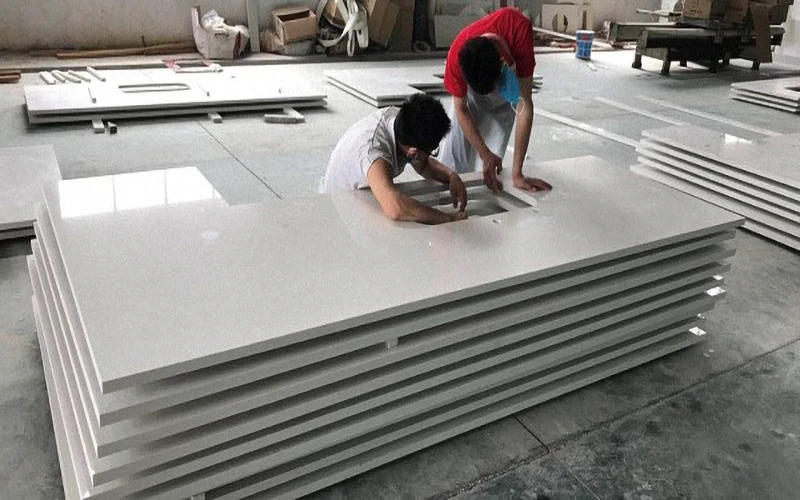
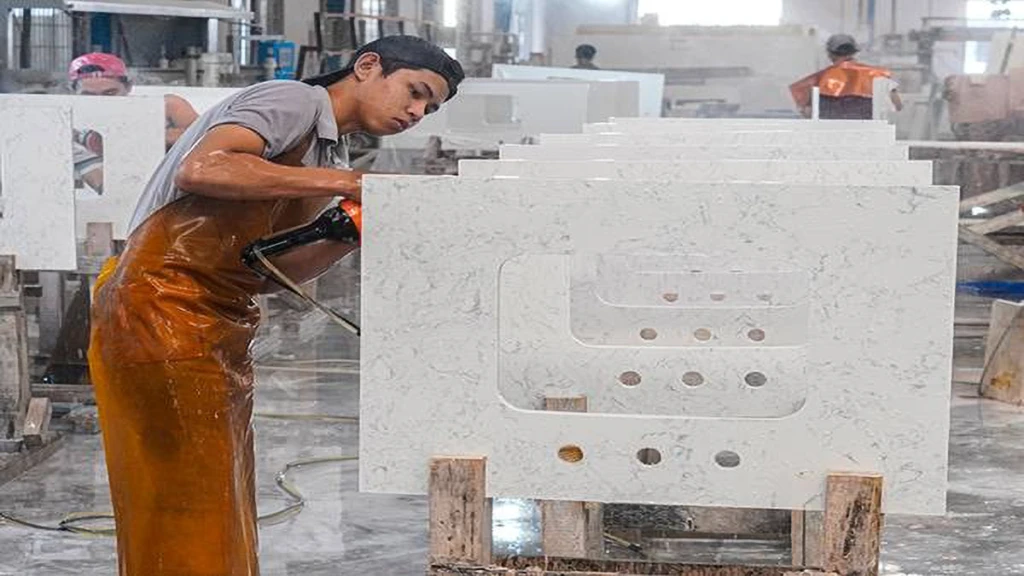
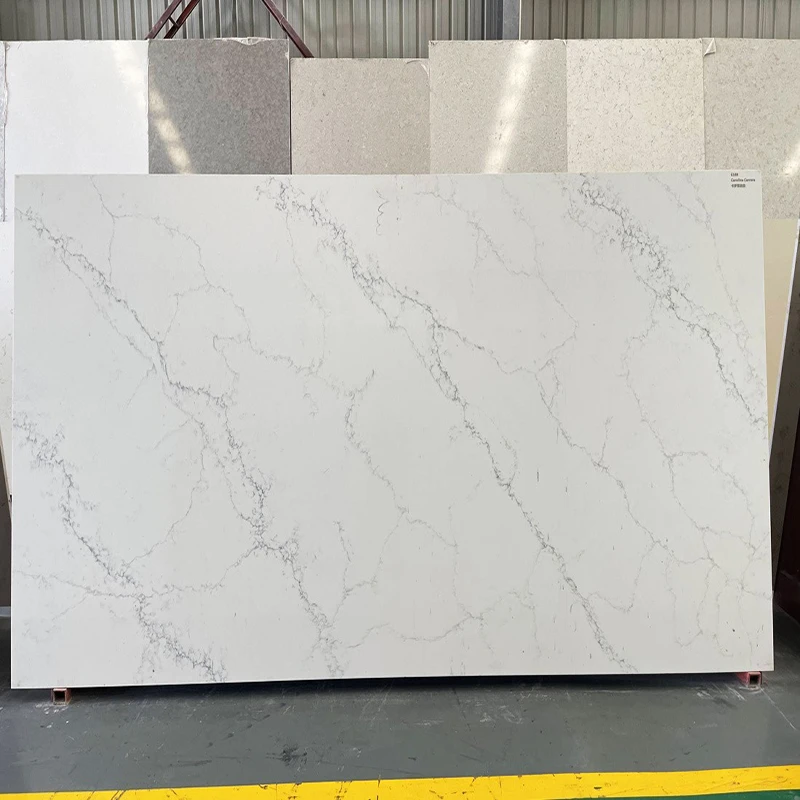
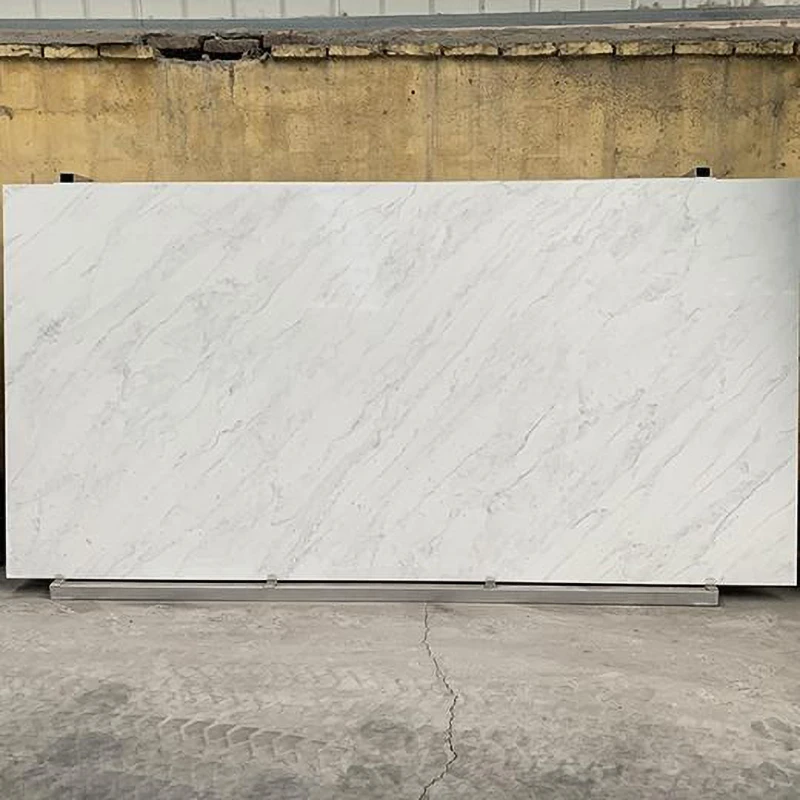
First, this is the step that gets skipped way too often. The product format — full slabs, prefabs, cut-to-size. Or printed quartz — has to be locked before you design packaging or finalize your branding. A private-label program for slab distributors looks nothing like one for hotel vanity packages or builder-grade apartment projects.
| Product Path | Typical Buyer | What It Changes |
|---|---|---|
| Full Quartz Slabs | Slab distributors, stone yards, large fabricators | MOQ, shipping method, warehouse handling, display-rack design |
| Printed Quartz Slabs | Design-led distributors, showroom brands, high-end project buyers | Design exclusivity, batch matching, full-slab approval process, longer lead time |
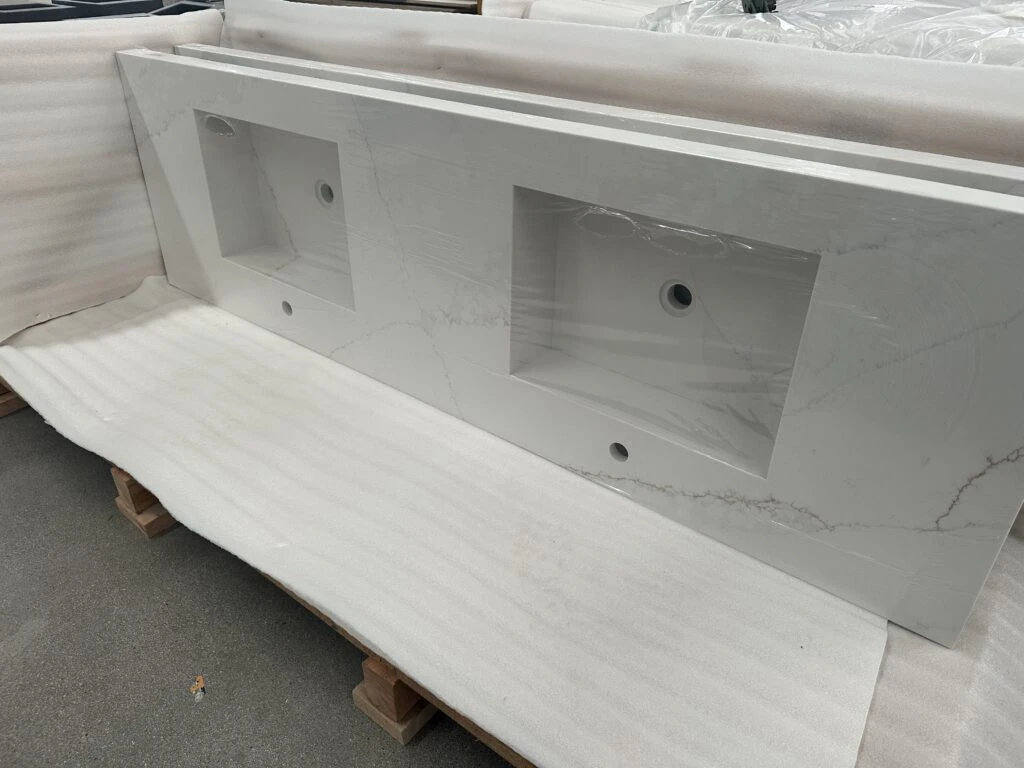
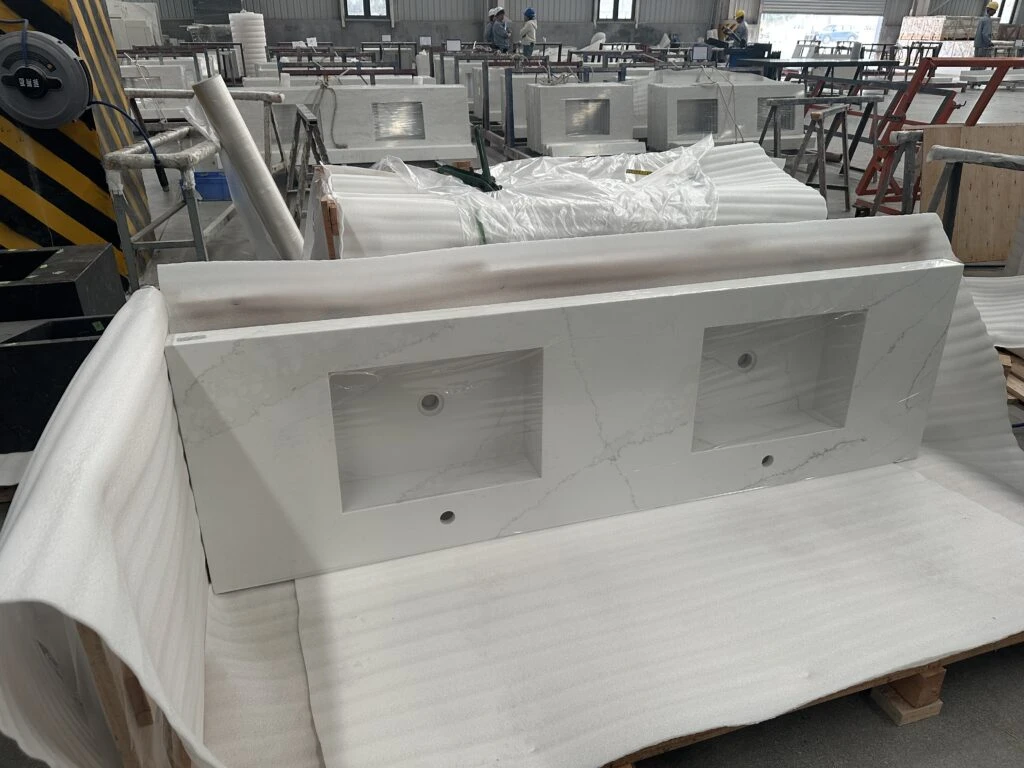
| Prefab Quartz | Kitchen showrooms, renovation brands, smaller importers | Packaging per piece, lower per-order weight, different freight class |
| Cut-to-Size | Project buyers, commercial fit-out, hotel groups | Fabrication specs integrated pre-shipment, pallet configuration, site timing |
| Mixed Container | Multi-segment distributors | Higher planning complexity but broader market coverage |
First, relevant product pages for your planning: Quartz slab specifications → Printed quartz slabs → Prefab quartz programs → Cut-to-size quartz project supply → Silica-free surface options. Get clear on the format first. Specifically, everything else — pricing, packaging, shipping, and stocking — flows from that decision.
4. How OEM Quartz Production Works: A Practical Process

First, a private-label program should be managed as a sequence of decisions. When you rush the sequence, the problems don’t disappear — they just show up later as slow-moving inventory, rejected samples, confused labels. Or batch variation complaints from fabricators. Here’s the process we follow with partners, step by step.
Step 1: Define the buyer and the positioning.
First, are you building a brand for high-end kitchen showrooms, or a value line for builder-grade apartment projects? These are not the same program. Specifically, different buyers expect different presentation, different sampling, different tolerance levels. Lock this before touching a color.
Step 2: Pick your first product range.
First, start small. Prove demand with 4–6 core colors before expanding. Specifically, decide upfront whether you’re running full slabs, printed quartz, prefabs, cut-to-size, or a mixed container. Each format changes your freight class, your warehouse setup, and how fabricators receive the product — so this isn’t a cosmetic decision.
Step 3: Lock the technical specs.
First, slab size, thickness, finish type, tolerance bands, edge profile, backing requirements, application notes — all of it. For slab programs, review the Quartz Slab Specs page before you ask for a quote. Specifically, you’d be surprised how many people skip this and then wonder why the quote doesn’t match their expectations.
Step 4: Approve samples — properly.
First, a 10×10cm chip is fine for a first screening, but private-label approval needs more. Large panel samples, full-slab images, edge inspection for miter work, and a clear sample-to-bulk comparison method. For printed quartz, batch matching is everything — you want to see full slabs, not chips.
Step 5: Prepare branding and packaging files.
First, logo files, label layout, SKU names, color names, shipping marks, box/carton artwork if applicable, sample-board requirements. Keep it simple. Specifically, the most elegant branding in the world doesn’t matter if the factory can’t reproduce it consistently across thousands of labels.
Step 6: Confirm QC evidence before shipment.
First, color and vein review photos, thickness and size measurements, bundle labels, packing condition shots, container loading records. This is your leverage. Specifically, don’t release the balance payment until you’ve reviewed this evidence. A $500 inspection saves you from accepting a $15,000 container of slabs that fabricators will reject.
Step 7: Plan the reorder cycle.
First, the first container is the launch, not the finish line. Decide reorder trigger points, fast-moving color review cadence, batch reference sample retention. And whether your key colors need reserved production slots for predictable lead times.
For supplier evaluation before committing to a first container, use the Quartz Slab Supplier Guide. For container-level planning, origin routing. And QC document workflows, the Supply Chain Guide has the full picture.
5. Where Printed Quartz OEM Creates Real Differentiation
First, a basic private-label program can — and should — start with proven stock colors. That’s the sensible first container. But once you’ve proved the model and you’re ready to build something harder for competitors to copy, printed quartz is where the game changes.
First, here’s why: printed quartz lets you design the visual — marble veins, onyx translucency, terrazzo aggregates. Concrete textures — rather than picking from a catalog that every other distributor can also access. Specifically, your fabricators can’t find the same slab from three other local suppliers. Your showroom doesn’t look like everyone else’s. In particular, that’s defensible.
Where printed quartz OEM typically creates the most value:
- Marble-look programs for buyers who want natural-stone visuals with repeatable supply — no veining lottery, no batch panic.
- Hotel, apartment, retail, and reception projects where visual consistency across 200+ slabs matters way more than one-of-a-kind uniqueness.
- Distributor showroom collections where the color story shouldn’t be identical to six competitors within a 50-mile radius.
- Private-label designs that need full-slab approval, batch matching, and sample-to-bulk control before mass production starts.
First, printed quartz isn’t magic — it still needs rigorous review. Confirm full-slab appearance, pattern scale, vein direction, edge/miter presentation, surface finish, and batch matching before mass production. For the deep dive, read What Is Printed Quartz? and review the AsiaQuartz Printed Quartz Slabs product page.
6. The Economics: What Actually Changes Your Private-Label Cost
First, don’t think of private label as a “cheaper sourcing” shortcut. It’s not about finding the lowest factory-gate price — it’s about designing a product architecture that gives you room to price, position. And reorder on your terms. The real value is structural control, not a few dollars shaved off the FOB quote.
Here’s where the economics shift when you move from brand distribution to private label — and the variables that actually move the numbers:
| Cost Driver | Branded Distribution | Private Label | What You Control |
|---|---|---|---|
| Product cost (FOB) | Brand sets wholesale price — you don’t see factory cost | You negotiate factory-direct with your spec | Color selection, thickness, format, order volume |
| Brand/marketing fee | Built into the wholesale price (typically 8–15%) | Stripped out — you invest your own marketing budget | Your marketing spend, your brand equity |
| Packaging & labeling | Brand-standard, no customization | Your design, your SKU logic, your specs | Artwork, label format, sample boards, display materials |
| Logistics & freight | Often managed by brand logistics | You or your forwarder manage | Route selection, consolidation, container optimization |
| Margin structure | Typically 15–25% gross at distributor level | Varies by product architecture, but structurally wider | Your pricing strategy across channels |
| Inventory risk | Slow-movers forced by brand program | You stock what sells in your market | SKU count, reorder triggers, safety stock logic |
First, the point isn’t that private label is always higher-margin — it’s that you design the margin equation instead of inheriting it. Some distributors run branded lines for volume and private-label SKUs for profit on top of the same warehouse infrastructure. Specifically, that dual model works remarkably well — the branded line opens the door with fabricators. And the private-label line is the higher-margin upsell once you’ve earned their trust.
7. The Specification File Every Private-Label Buyer Should Prepare
If you walk into a private-label conversation with nothing but a logo and a target price, you’re going to get a generic quote that doesn’t fit your market. The factories that do private label well want to see a spec file — it’s how they quote accurately and produce consistently. And it becomes the reference document for samples, production, QC, packing, and every reorder discussion.
Here’s what should be in it:
- Brand name, logo files (vector + PNG), color names, SKU code logic, and packaging label requirements.
- Target market, buyer type (fabricator / showroom / builder / project), intended application, and expected first-container quantity.
- Product format: full slabs, printed quartz, prefab quartz, cut-to-size, or mixed program structure.
- Slab size, thickness, finish, edge profile, tolerance expectations, and any fabrication or installation notes.
- Reference colors, approved samples, full-slab photos, pattern direction notes, and batch-matching expectations.
- Documentation requirements: QC photo checklist, packing records, loading photos, SDS, test reports (XRD where applicable), Certificate of Origin support.
- Destination port, preferred origin, container timing, reorder plan, and phased project needs if applicable.
For project-based private label programs — commercial builds, multi-unit residential. Hotel fit-outs — also compare the Quartz Project Supply Guide and the Commercial Quartz Guide before you finalize the first-order structure. However, the timeline and tolerances that work for stocking distributors don’t necessarily work for phased construction schedules.
📋 Don’t build the spec file from scratch. Contact us for AsiaQuartz’s Private Label Specification Template — a guided document that walks you through every field your factory needs before quoting.
8. QC and Packaging: Where Private Label Becomes Trustworthy
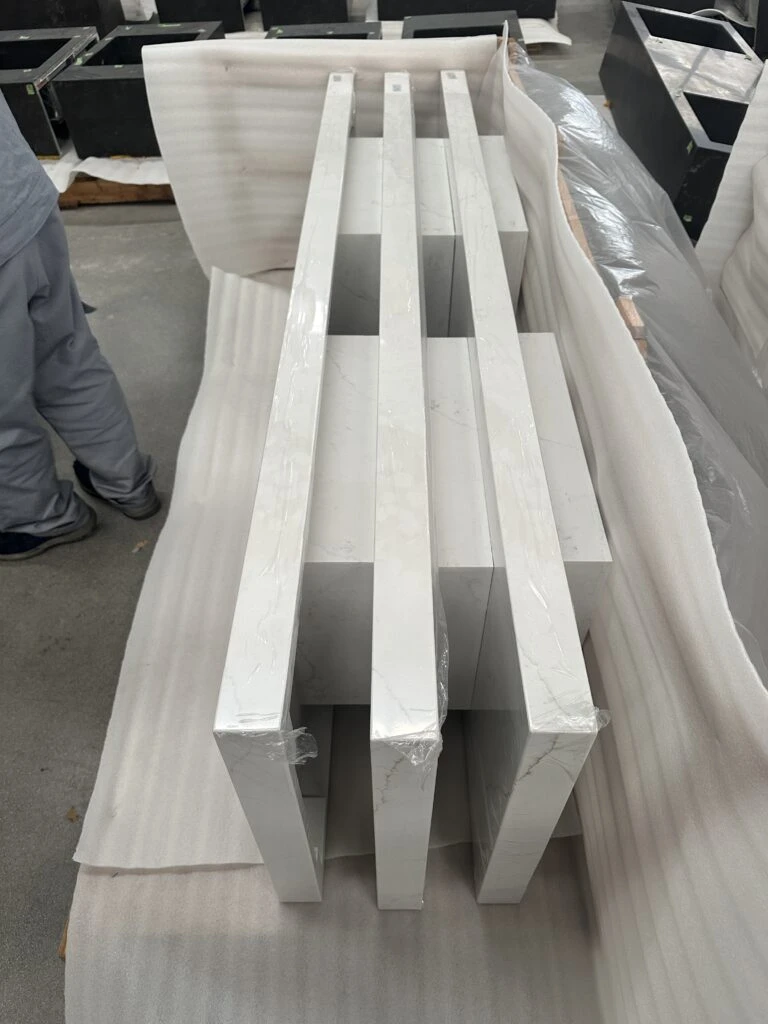
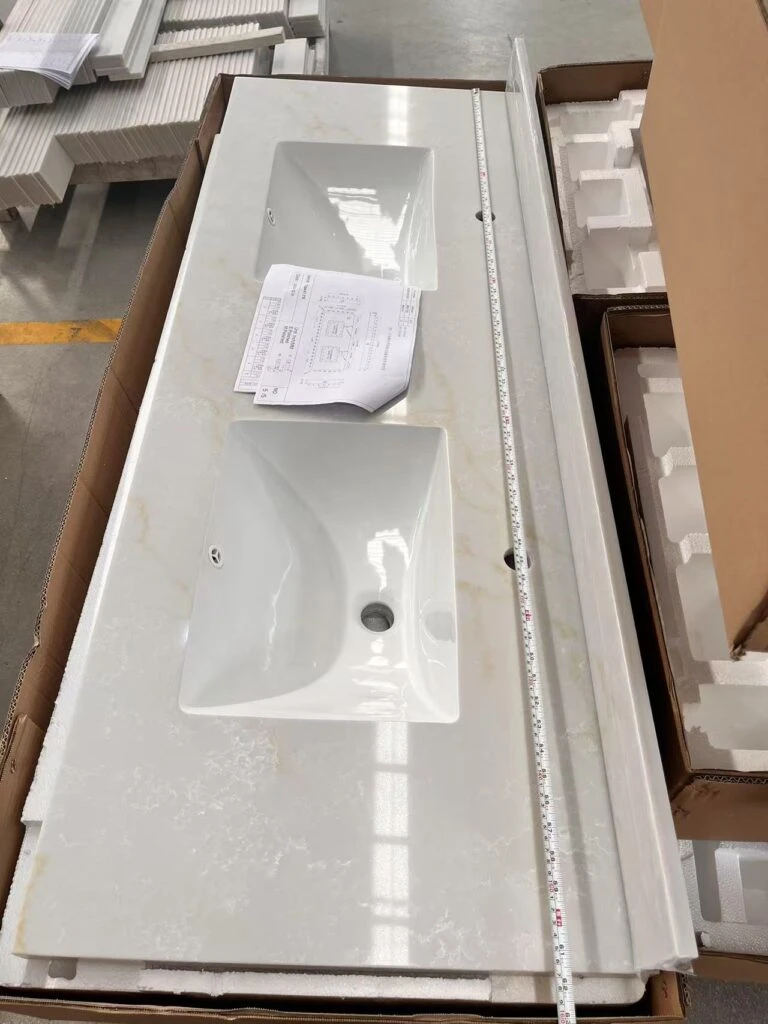
First, a private-label brand can lose credibility faster than a branded one. When a branded slab arrives with off-color, the fabricator blames the brand. When your slab arrives off-color, they blame you — and they might not give you a second chance.
First, that’s why private label must be connected to QC evidence at every stage, not just design and packaging. AsiaQuartz’s supply chain workflow emphasizes pre-shipment documentation: color and vein review photos, thickness measurement records, bundle label verification, packing condition checks. And container loading evidence. These records should be part of your approval gate before the balance payment is released and the container ships. For a deeper inspection workflow, review the Quartz Slab QC & Packing Guide before approving your first private-label container.
First, Don’t skip this. The #1 reason private-label first containers get rejected isn’t structural failure — it’s color mismatch between the approved sample and the production batch. A third-party inspection with photos and measurement records costs a few hundred dollars. Rejecting or returning a full container costs thousands, plus the reputational hit with fabricators who were waiting for those slabs. Specifically, do the math.
9. Common Mistakes in First Private-Label Quartz Programs
First, we’ve reviewed enough first-time private-label programs to see the same patterns repeat. Here are the five that cost the most time and money — each one avoidable with a little extra planning up front.
⚠️ Mistake 1: Launching with Too Many Colors
First, A private-label brand doesn’t need a 30-color catalog on day one. Too many colors lock cash into slow-moving inventory and confuse your showroom message. Specifically, start with 4–6 proven core colors, let fabricator feedback and sales data tell you what to add next. We’ve seen importers tie up $50K+ in inventory for colors that moved ten slabs in six months. In particular, you can always expand. You can’t un-buy a container of slow movers.
⚠️ Mistake 2: Treating a Small Sample as Full Approval
First, A 10×10cm chip can’t show you full-slab vein movement, tone range across 3200mm, edge appearance for mitered work. Or how the pattern behaves at scale. For any design-led or printed quartz program, insist on large panel samples and full-slab photos before signing off. This is especially critical for marble-look and onyx-look designs where vein density can shift dramatically from chip to full slab.
⚠️ Mistake 3: Assuming a Logo Equals a Brand
First, A brand is more than a sticker. It needs product logic, consistent naming, specification sheets, fabricator education materials, reorder confidence, and sample continuity. Specifically, we’ve talked to fabricators who stopped ordering private-label lines not because the stone was bad. But because the labels were inconsistent, the color names changed between batches. And they couldn’t trust that this month’s “Bianco Elite” was the same as last month’s. Consistency is the whole game.
⚠️ Mistake 4: Skipping Pre-Shipment QC
First, You’re not just buying slabs — you’re staking your brand’s reputation on them. Require color and vein review photos, thickness and size measurements, bundle label verification, packing condition records. And container loading evidence before approving dispatch. Once the container leaves the factory, any quality issue becomes your problem at destination. Specifically, fixing it at the factory costs a conversation. Fixing it at your warehouse costs real money and delayed orders.
⚠️ Mistake 5: No Reorder Plan
First, The first container is the easiest one to plan. The second one is where it gets real. Specifically, decide reorder trigger points before stock runs low, keep batch reference samples for color matching across production runs. Know which colors need reserved production capacity. And have a replacement-color strategy if a SKU underperforms. A private-label brand that can’t reliably restock its bestsellers is just a one-off import deal with a logo.
10. How AsiaQuartz Supports Private Label Quartz Programs
First, asiaQuartz is a B2B quartz slab supplier and manufacturing-focused procurement partner for distributors, importers, fabricators, builders, and project buyers. We don’t just sell slabs — we coordinate the full private-label supply workflow: product selection. Specifically, sample approval, color development, printed quartz OEM, packaging, QC documentation, container planning. And multi-origin routing.
For private-label programs, the conversation typically starts with your target market, product format, expected volume, and branding requirements. From there, we map out the right product path, timeline. And documentation workflow — so the first container lands with the quality and consistency your brand depends on.
First, learn more about AsiaQuartz on the About page. Then reach out through the Contact page with your target market. Specifically, logo requirements, product format preferences. And first-container timeline for a private-label supply review.
FAQ:
First, it means you source quartz slabs, printed quartz, prefabs, or cut-to-size surfaces under your own brand name. The program can include branded labels, sample stickers, packaging marks, color names, SKU codes, QC files, and repeat-order planning. Specifically, simple in concept, but the execution detail is where most programs live or die.
First, they overlap but aren’t identical. Basic private label can use existing factory colors with your branding. Specifically, oEM quartz typically goes further: adjusted colors, custom printed designs, special sizes, project-specific packaging, or tight batch-retention requirements. Think of private label as the umbrella and OEM as the deeper customization tier within it.
First, yes — and it’s often where the strongest differentiation lives. Just make sure you confirm full-slab appearance, edge presentation, batch matching, sample approval process, MOQ requirements, and QC documentation before launch. Specifically, printed quartz rewards the detail-oriented. It punishes the ones who approve from a 10cm² chip.
First, it depends on product format, color count, customization level, packaging requirements. And origin route. A label-swap on existing colors usually needs less than a fully custom printed quartz program. Specifically, share your target volume and market first — don’t assume a fixed MOQ before the factory understands what you’re asking for.
First, almost never. A focused launch with a handful of proven colors is easier to stock, promote, and reorder. Let fabricator feedback and real sales data tell you what to expand. Specifically, the distributors who launch with twenty colors almost always end up cutting back to the five that actually sell — except now they’re sitting on fifteen SKUs of dead stock.
At minimum: product specifications, approved sample records, slab or piece photos. Thickness and size measurement records, packing photos, loading records, packing list, commercial invoice. And any SDS, test reports (XRD where applicable), or origin documents required by your buyer or the destination market.
First, it can — if the product series and documentation support your target market’s requirements. Review silica-free or low-silica options early and confirm relevant test documentation such as XRD or SDS files where needed. Compliance requirements vary by region. Specifically, always consult with your local legal and safety experts regarding engineered stone regulations before finalizing your product specification. For background, read our Silica-Free Surfaces Guide and Engineered Stone Ban overview.
First, it can be — if you have repeat demand, a clear target market. And the discipline to launch with a focused collection instead of trying to build a full catalog upfront. Specifically, the risk goes up when a small distributor tries to look big by launching too many SKUs with weak packaging and no reorder plan. Start lean, prove the model, then scale. In particular, we’ve seen distributors running 3-container programs that are more profitable than 15-container branded operations — because the margins are theirs and the inventory turns faster.
Conclusion: Build the Brand Before You Build the Catalog
First, private label quartz isn’t a shortcut to better margins, and it’s not the right path for every distributor. But for the ones who are tired of renting someone else’s brand equity. Specifically, it’s the only path that builds an asset you own — a product line, a customer relationship. And a market position that nobody can take away with a contract termination letter.
First, the strongest private-label programs we’ve seen don’t start with a big catalog. They start with a clear market position, a focused color range, locked specifications, approved samples, packaging rules, QC evidence. And a reorder plan. The catalog grows when the demand proves itself — not before.
For distributors, the question isn’t just “Can I buy slabs directly from a factory?” The better question is: can I build a quartz program that fabricators trust. That my warehouse can manage. And that my market actually remembers?
First, asiaQuartz works with distributors, importers, kitchen and bath brands. And project buyers on private-label quartz programs that include printed quartz. Specifically, full slabs, prefab quartz, cut-to-size supply, silica-free options, QC documentation. And multi-origin planning. If you’re ready to start that conversation — with real specs. Not just a wish list — send us your target colors. In particular, product format, expected volume, destination market. And branding requirements for a private-label supply review.