Editorial Note
Prepared by: AsiaQuartz Editorial Team
Technical review by: AsiaQuartz Product, QC & Supply Chain Team
Last updated: June 2026
Printed quartz is an engineered quartz surface where marble-look or stone-look patterns are created through advancePrinted quartz is an engineered quartz surface that uses controlled printing or related decorative technology to create marble-look, quartzite-look, or stone-look designs. For B2B buyers, appearance is only the starting point.
The more important questions concern sample approval, full-slab appearance, edge details, batch review, QC records, packing, and repeat supply. Therefore, buyers should evaluate printed quartz as both a design product and a supply program.
This guide explains how printed quartz differs from standard quartz, marble, and porcelain. It also covers the benefits, limitations, applications, QC checks, slab specifications, fabrication issues, and sourcing questions that matter before a bulk order.
Quick Answer: What Is Printed Quartz?
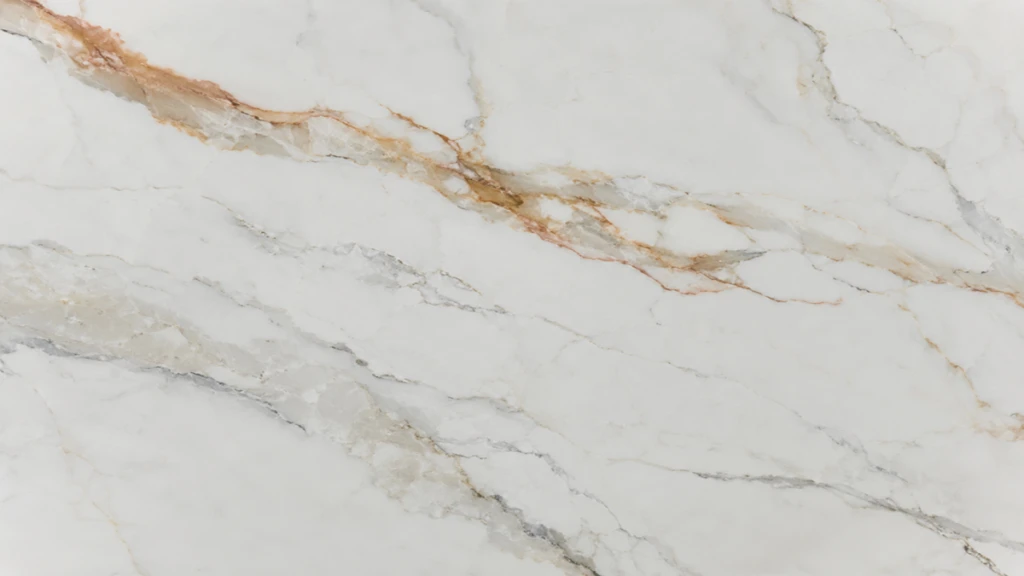
Printed quartz uses a quartz-based engineered slab together with a controlled decorative process. The process can create planned marble-style veining, warmer stone looks, softer movement, and other full-slab visual effects.
However, printed quartz is not simply a large printed picture. The slab body, surface process, finish, pattern direction, edge appearance, and fabrication behavior all affect the final result. Product quality can also vary between manufacturers and product series.
What B2B Buyers Should Focus On
A homeowner may first ask whether a slab looks attractive. By contrast, a distributor, fabricator, importer, or project buyer needs to ask whether the approved look can move into bulk production with controlled review steps.
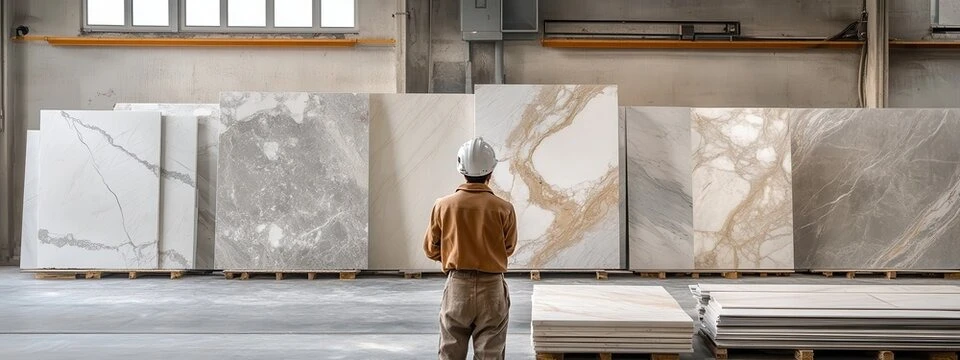
Before ordering, check the approved sample, full-slab image, edge or miter sample, pattern direction, available thickness, QC scope, packing method, and repeat-order plan. These checks give the buyer a more reliable basis than a small sample or rendered room image alone.
View Commercial Printed Quartz Slabs
What Is Printed Quartz Made to Do?
Traditional engineered quartz often builds its visual character through mineral particles, pigments, aggregates, and internal patterning. Printed quartz takes a more design-led approach to the visible surface.
As a result, manufacturers can plan the overall direction of a marble-look or stone-look design at slab scale. This can support stronger Calacatta-style veins, soft quartzite movement, warm beige designs, or quieter low-contrast patterns.
Printed Quartz Is Still a Product System
The printed design does not determine quality by itself. Buyers also need to review slab flatness, thickness, finish, surface quality, color stability, edge behavior, fabrication guidance, and product-specific technical information.
Therefore, buyers should compare the exact product series rather than assume every printed quartz slab performs the same way. A strong program connects the approved visual reference to production, inspection, packing, and future reorders.
Printed Quartz vs. Standard Quartz
The main difference is visual design control. Standard quartz remains a strong choice for classic whites, greys, Carrara-style patterns, aggregate looks, and distributor stock programs. Printed quartz focuses more heavily on design-led marble and stone effects.
For commercial work, that difference can matter across many rooms or units. For example, a hotel vanity program or apartment kitchen package may need the same design direction across several shipments.
Compare the Main Differences
| Factor | Printed Quartz | Standard Quartz |
|---|---|---|
| Design approach | Controlled marble-look, quartzite-look, or stone-look visual design | Color, aggregate, pigment, and conventional engineered-quartz pattern systems |
| Best fit | Design-led collections, hospitality, retail, apartments, feature surfaces | Classic stock colors, builder programs, prefabs, standard kitchens and vanities |
| Full-slab review | Especially important because pattern scale and direction drive the visual result | Still important for color, pattern, finish, and batch review |
| Edge review | Important for exposed edges, miters, waterfalls, and thick visual details | Depends on the design and fabrication detail |
| Repeat-order planning | Use an approved reference, batch photos, and written review rules | Use approved samples, product codes, and batch review |
Printed Quartz vs. Marble and Porcelain
Printed quartz does not replace every surface material. Instead, buyers should match the material to the project design, fabrication method, maintenance expectations, installation environment, and supply plan.
Compared with Natural Marble
Natural marble offers genuine geological variation and a strong luxury identity. However, block-to-block variation can make matching more difficult across large or phased projects.
Printed quartz can offer a more controlled marble-look direction. Therefore, it may suit projects that value repeatable design planning more than natural variation.
Compared with Porcelain or Sintered Stone
Porcelain and sintered stone can work well for thin panels, walls, large-format surfaces, and architectural applications. However, fabrication and edge systems differ from quartz and depend on local shop experience.
Printed quartz may feel more familiar to fabricators who already process engineered quartz. Even so, buyers should confirm the exact slab thickness, edge detail, handling method, and application before choosing a material.
Benefits of Printed Quartz for B2B Buyers
1. Design-Led Marble Looks
Printed quartz can support Calacatta, Statuario, warm white, beige, grey, and quartzite-inspired directions. This gives distributors and project teams more control over the visual story of a collection.
For example, a buyer can build a range around warm marble, soft veining, or Taj Mahal-inspired movement instead of selecting unrelated slab designs.
2. Better Planning for Multi-Unit Projects
Hotels, apartments, retail chains, and distributor programs often need repeatability across many units. Printed quartz can support that planning when the supplier keeps approved references and compares new production against them.
However, repeatability does not mean every slab will be visually identical. Buyers should define the permitted visual range and review the new batch before shipment.
3. A Practical Indoor Surface Option
Many buyers use engineered quartz for countertops, vanities, reception desks, bar counters, and retail fixtures. Printed quartz can add a stronger decorative direction to those indoor applications.
Before approval, confirm cleaning guidance, finish, warranty terms, stain-resistance data where available, and suitability for the exact use.
4. Easier Collection Storytelling
Distributors can organize printed quartz around clear design families. As a result, sales teams can present the collection by look, project type, and price position rather than as a random group of colors.
This approach can also make sample boards, digital catalogs, showroom displays, and project presentations easier to understand.
5. A Clear Sample-to-Bulk Review Process
A good printed quartz program builds sample approval into the buying process. First, the buyer approves the visual reference. Next, the supplier reviews the production batch against that reference.
Then, both sides can review agreed full-slab photos, edge details, QC records, packing photos, and loading records before release.
Limitations and Buyer Risks
Printed quartz has real advantages, but buyers should also understand its limitations. Most sourcing problems appear after cutting, edging, layout, installation, or later reordering rather than when viewing a small face sample.
Edge Realism and Miter Details
The face of a printed slab may show more visual depth than an exposed edge. Therefore, projects with waterfall islands, thick visual edges, or exposed side panels need extra review.
Ask for a straight-edge sample or miter sample when the edge will remain visible. Also check pattern direction and seam placement before cutting.
Pattern Repetition and Layout Planning
Pattern repeatability helps supply planning. However, it can become visible when a project uses many slabs in one large viewing area.
For feature walls, long reception desks, or full-height backsplashes, request full-slab images and plan slab sequencing. A layout review can reduce obvious repetition and awkward vein transitions.
UV and Colorfastness
Do not rely on broad promises such as “will never fade.” Instead, ask for UV or colorfastness information where available, indoor-use guidance, warranty terms, and project-specific suitability.
Unless the supplier provides clear outdoor-use data and warranty coverage for the exact product, buyers should not assume that a printed quartz series suits exterior use.
Repair Expectations
Surface damage can affect the printed visual differently from a conventional through-pattern material. Therefore, buyers should discuss scratch, chip, repair, and replacement expectations with the supplier and fabricator.
For projects that may need future replacement pieces, keep the approved sample, product code, full-slab reference, and batch records.
Supplier Quality Can Vary
Printed quartz describes a product category, not one universal quality level. Two similar-looking slabs can differ in slab stability, finish, print clarity, flatness, edge appearance, batch control, and documentation.
That is why B2B buyers should use a product-specific QC plan rather than judge the material from catalog photos alone.
Best Applications for Printed Quartz
Hotel Vanities and Hospitality Interiors
Hotels often need one design direction across many guest rooms and public areas. Printed quartz can support that goal when the buyer controls samples, batches, and future replenishment.
Retail Counters and Reception Desks
Retail stores, boutiques, showrooms, and reception areas need strong visual impact. Printed quartz can create a distinctive surface while giving the procurement team a structured sample and supply process.
Multi-Unit Kitchens and Vanities
Apartment and condominium programs often need repeatable colors and predictable replenishment. Printed quartz can work as a marble-look upgrade for islands, countertops, backsplashes, and vanities.
Feature Walls and Full-Slab Backsplashes
Large surfaces show the full pattern scale. Therefore, buyers should review complete slab images, layout direction, fixing details, and installation support early in the project.
Distributor Collections
Printed quartz works best for distributors when each color has an approved sample, full-slab reference, sales image, technical file, and reorder rule.
As a result, the sales team can explain both the design and the supply expectations more clearly.
Printed Quartz Design Directions to Watch
Printed quartz gives buyers a practical way to test design-led collections. However, design trends should support the target market rather than replace product validation.
Warm Neutrals and Quartzite-Inspired Movement
Cream, beige, soft gold, warm grey, and gentle taupe can create a softer look than cold grey marble patterns. Taj Mahal-inspired movement and low-contrast beige-white designs can also suit hospitality and residential programs.
Softer Calacatta and Statuario Looks
Bold Calacatta and Statuario designs remain important. Meanwhile, many projects also benefit from softer movement and lower contrast because those patterns can sit more calmly across repeated surfaces.
Matte and Honed Finishes
Matte and honed finishes can create a quieter architectural look. However, buyers should test real samples because cleaning behavior, fingerprint visibility, scratch visibility, and stain performance can vary by series.
Full-Slab Pattern Scale
A small sample cannot show the full design. Therefore, buyers should review full-slab images before approving a pattern for backsplashes, reception desks, islands, or feature walls.
Printed Quartz Slab Sizes and Thicknesses
Product availability should be confirmed before sample approval. For current AsiaQuartz slab planning, millimeter dimensions should control the order specification. Inch figures are commercial references.
Current Size References
| Slab Size | Commercial Reference | Supply Position |
|---|---|---|
| 3200 × 1600 mm | 127″ × 64″ | Regular Jumbo Size |
| 3000 × 1400 mm | 118″ × 55″ | Project Size |
| 3000 × 1500 mm | 118″ × 59″ | Project Size |
| 2800 × 1400 mm | 110-1/4″ × 55″ | Project Size |
| Up to 3530 × 2030 mm | Up to 138″ × 79″ | Super Jumbo Size |
Thickness for Marble-Look Printed Quartz
AsiaQuartz manufactures standard quartz slabs in 20 mm (3/4″) and 30 mm (1-1/4″). Some quartz programs can also use 12 mm and 15 mm for selected special applications.
However, the current marble-look quartz program uses 20 mm and 30 mm only. Therefore, buyers should confirm the exact printed design, slab size, thickness, finish, and quantity together before bulk approval.
Review Quartz Slab Sizes & Specifications
What B2B Buyers Should Check Before Ordering Printed Quartz
A printed quartz order should follow a controlled review process. The goal is to reduce surprises between sample approval, bulk production, fabrication, packing, and installation.
Use This Pre-Order QC Checklist
| QC Item | What to Check | Why It Matters |
|---|---|---|
| Approved sample | Color, finish, pattern direction, thickness, and surface appearance | Creates the reference for bulk review |
| Full-slab image | Complete slab rather than only a close-up | Shows scale, direction, movement, and repetition |
| Edge sample | Visible straight, eased, or exposed edge where relevant | Shows how the side will appear after fabrication |
| Miter sample | 45-degree miter for waterfall or thick visual edges | Helps evaluate high-visibility details before production |
| Batch comparison | Production slabs against the approved reference | Supports phased projects and repeat orders |
| Thickness and flatness | Agreed thickness, tolerance, and slab flatness | Supports fabrication and installation planning |
| Finish | Polish, matte, honed, gloss, and surface consistency as applicable | Reduces visual and maintenance surprises |
| Packing | Bundle or crate condition, labels, protection, and photos | Supports shipment and receiving control |
| Loading record | Container photos and shipment records where agreed | Provides evidence before shipment release |
| Technical documents | SDS, product data, test files, and application guidance where available | Supports buyer and fabricator review |
Keep the Reference for Repeat Orders
After approval, keep the product code, current version, approved sample, full-slab reference, and agreed visual range. Then use the same reference package when placing the next order.
This process does not guarantee identical slabs. However, it gives both sides a consistent basis for reviewing later production.
Sourcing Notes for Importers and Distributors
Importers and distributors should treat printed quartz as both a design product and a supply program. Therefore, the RFQ should cover more than color and unit price.
Confirm the Commercial Basics First
Start with the exact design, slab size, thickness, finish, quantity, MOQ, lead time, and destination. Next, confirm the sample-approval process and the documents that will support QC and shipment review.
Confirm the Production Route
If origin matters to the project, ask where the product will actually be manufactured. The production route should reflect the real manufacturing arrangement rather than document-only transshipment.
AsiaQuartz currently plans selected quartz programs through China and qualified production partners in Vietnam and Thailand. However, availability and origin need confirmation for the exact SKU and order.
Ask About Repeat Supply Before the First Order
A useful sourcing discussion should answer several questions. Which colors are available now? Which designs can support later reorders? What sample will control bulk approval? What full-slab, edge, QC, packing, and loading records will the buyer receive?
These questions turn a printed quartz purchase into a more controlled procurement process.
Fabrication Safety Note
Cutting, grinding, polishing, drilling, or shaping silica-containing engineered stone can generate respirable crystalline silica dust. Therefore, fabrication teams must follow the rules and exposure-control requirements that apply in their location.
In the United States, OSHA regulates occupational exposure to respirable crystalline silica. NIOSH also warns that engineered-stone countertop fabrication can create serious silica exposure risks. Engineering controls, work practices, respiratory protection where required, and appropriate housekeeping all form part of exposure control.
This article is not a legal or workplace-safety manual. Buyers should obtain the SDS and product-specific technical information, then work with qualified fabricators and the relevant local authorities.
Official references: OSHA — Crystalline Silica and NIOSH — Silica.
Discuss Silica-Free Surface Options
When Should You Choose Printed Quartz?
Printed quartz works best when the design, fabrication, supply, and QC requirements match the product. It is not automatically the right material for every job.
Choose Printed Quartz When
- You need a marble-look, quartzite-look, or stone-look design with controlled sample approval.
- The project includes hotels, apartments, retail counters, reception desks, vanities, backsplashes, or distributor collections.
- You can review full-slab images, edge or miter samples, batch photos, and QC records before shipment.
- You want a repeat-order process built around an approved product reference.
Use Extra Caution When
- The project has exposed thick edges, waterfall islands, or highly visible miters without an approved edge sample.
- The layout covers a large continuous area but the team has not planned pattern repetition or slab sequencing.
- The supplier cannot provide full-slab images, product data, packing records, or a clear sample-to-bulk review process.
Choose Another Material or Product When
- The project requires exterior performance but the exact printed quartz product lacks suitable outdoor-use data and warranty coverage.
- The design brief specifically requires natural stone authenticity and unique geological variation.
How AsiaQuartz Supports Printed Quartz Buyers
AsiaQuartz supplies printed quartz for distributors, fabricators, importers, and commercial project buyers. The program focuses on product selection, sample approval, full-slab review, batch planning, QC records, export packing, and container-level supply support.
Review the Product Before Bulk Production
Buyers can review the color series, slab size, 20 mm or 30 mm thickness, finish, edge expectations, project use, and sample requirements before bulk production.
Review the Supply Evidence Before Shipment
Depending on the agreed order scope, the review package can include full-slab images, QC records, packing photos, labels, and loading records. As a result, buyers can evaluate the order before shipment rather than relying only on catalog claims.
If you are comparing printed quartz for a distributor program or commercial project, start with samples and full-slab references. Then confirm the edge details, thickness, MOQ, production route, documents, packing, and shipping schedule.
Request Printed Quartz Samples
FAQ: Printed Quartz for B2B Buyers
Printed quartz is a quartz-based engineered surface that uses controlled printing or related decorative technology to create marble-look, quartzite-look, or stone-look designs. B2B buyers should review the full slab, edges, batch, QC records, and repeat-supply plan before ordering.
Printed quartz is generally a quartz-based engineered surface. However, composition, decorative technology, finish, and performance can vary by product series. Therefore, buyers should confirm the product-specific specifications and technical documents.
Standard quartz often creates its visual pattern through pigments, aggregates, and conventional engineered-quartz pattern systems. Printed quartz uses a more controlled decorative process to create design-led stone visuals. As a result, full-slab pattern and edge review become especially important.
The main benefits include design control, marble-look options, sample approval, project planning, and repeat-order support. However, buyers still need to review edges, pattern repetition, finish, fabrication, and product-specific technical data.
The main risks include visible edge differences, repeated patterns, unsuitable exterior use, repair limitations, and quality differences between suppliers. A good sample and QC process helps buyers evaluate those risks before bulk production.
Do not rely on a universal yes-or-no answer. Instead, request product-specific UV or colorfastness information where available, indoor-use guidance, and warranty terms. Buyers should not assume exterior suitability without supporting data.
Yes, when the product and fabrication detail suit the design. However, buyers should approve the miter, edge appearance, pattern direction, and slab layout before cutting.
Yes. It can work for hotel vanities, reception desks, retail counters, apartment kitchens, and other indoor commercial surfaces. The project should use an approved reference, batch review, suitable fabrication details, and a clear supply plan.
AsiaQuartz uses 3200 × 1600 mm (127″ × 64″) as its regular Jumbo Size. Project sizes include 3000 × 1400 mm, 3000 × 1500 mm, and 2800 × 1400 mm. Super Jumbo can reach 3530 × 2030 mm (138″ × 79″). Confirm availability for the exact printed design before ordering.
The current AsiaQuartz marble-look quartz program uses 20 mm (3/4″) and 30 mm (1-1/4″) only. Therefore, buyers should confirm design and thickness together before sample approval.
Check the approved sample, full-slab image, edge or miter sample, pattern direction, thickness, finish, batch comparison, QC records, packing photos, loading records, SDS, and available technical data.
Yes. Sample approval should come before bulk production for B2B printed quartz orders. Review color, finish, pattern direction, edge expectations, thickness, and project use before confirming the order.
Next Step: Request Printed Quartz Samples and QC Review
If you are sourcing printed quartz for a distributor program, hotel project, apartment package, retail rollout, or commercial interior, begin with the product reference and full-slab review.
Next, confirm slab size, 20 mm or 30 mm thickness, edge expectations, batch review, QC records, packing, and the shipment plan. AsiaQuartz can review these items against your target market and order requirements.
Request Printed Quartz Samples & QC Review
Related Reading
Quartz Slab Sizes, Thicknesses & Specifications
Quartz Repeat Order Checklist: 7 Checks Before Reordering Slabs