By AsiaQuartz Editorial Team
Technical review by AsiaQuartz Product, QC & Supply Chain Team
Updated: September 2026
Buyers who type quartz distributors or quartz stone manufacturers into a search box are rarely after a definition. They are deciding who should fill the next container: regional quartz distributors who already hold stock, or a manufacturer who presses, books, and crates slabs to order. The two models sit at opposite ends of the supply chain, and the right call depends on order volume, lead time, and how much control you want over the slab itself.
What a quartz distributor does — and when it pays off
A distributor is the middle layer. They buy slabs from one or more manufacturers, carry inventory locally, and resell by the bundle or the container. That buffer stock is the real product: when you need 200 sqm of one color next week, a distributor with stock beats a factory running a 30-day production queue. The trade-off is margin and choice — you pay for the buffer, and you are limited to what the distributor already carries.
What a quartz stone manufacturer actually supplies
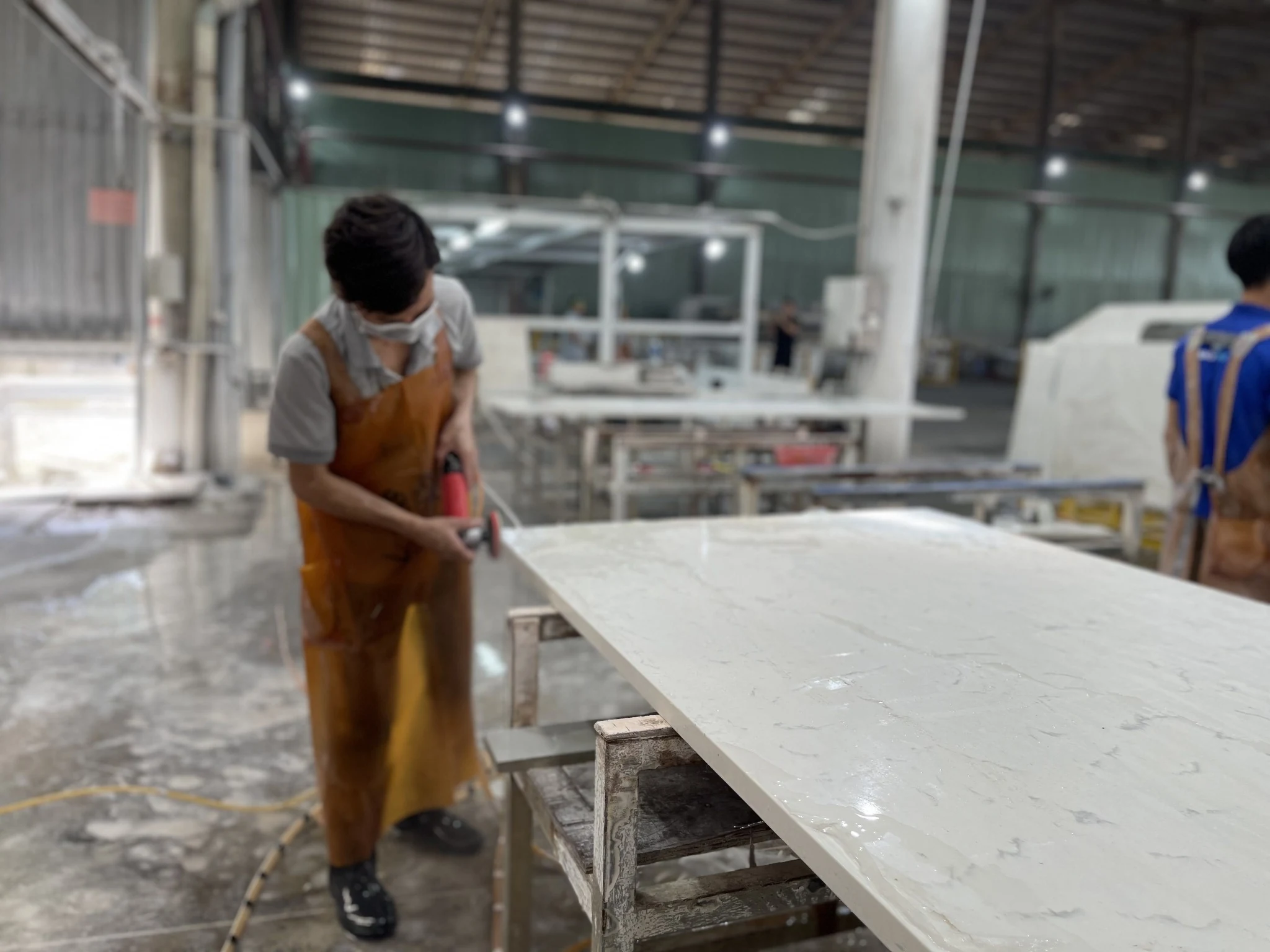
A quartz stone manufacturer (an engineered-stone plant) mixes the resin and aggregate, presses the slab, cures it, polishes it, and crates it. Going straight to the manufacturer removes the distributor margin and opens custom options: book-matching, exclusive colors, printed veining, and private-label programs. For buyers consolidating several colors into one 20 ft container, factory-direct is usually the lower landed-cost path — provided you can place the minimum run and wait for production. AsiaQuartz runs this model: we produce to order for quartz distributors worldwide and consolidate at container scale.
How to vet a quartz manufacturer or distributor
A name on a website means nothing until you verify the plant behind it. Our guide to vetting a quartz supplier remotely walks through factory video calls, batch photos, third-party inspection, and the paperwork that actually matters — mill test reports, silica documentation, and packing lists. The same checklist works whether you are vetting a distributor’s source plant or a manufacturer directly. Experienced quartz distributors run the same checks on their own upstream factories.
Quartz distributors vs factory-direct: sourcing models compared
Quartz distributors, factory-direct programs, and brands each optimize for something different. The sourcing-models comparison lays out landed cost, MOQ behavior, lead time, and customization for each, so you can match the model to the order in front of you rather than to a sales pitch.
Brand versus Chinese factory
Priced side by side, a branded slab and a factory-direct slab built to the same spec can land at very different costs for the same performance. The brands-versus-factories breakdown shows where the premium actually goes — and where it does not. That premium is also why many quartz distributors private-label from factories instead of reselling branded stock.
Regional notes for US, EU, and AU buyers
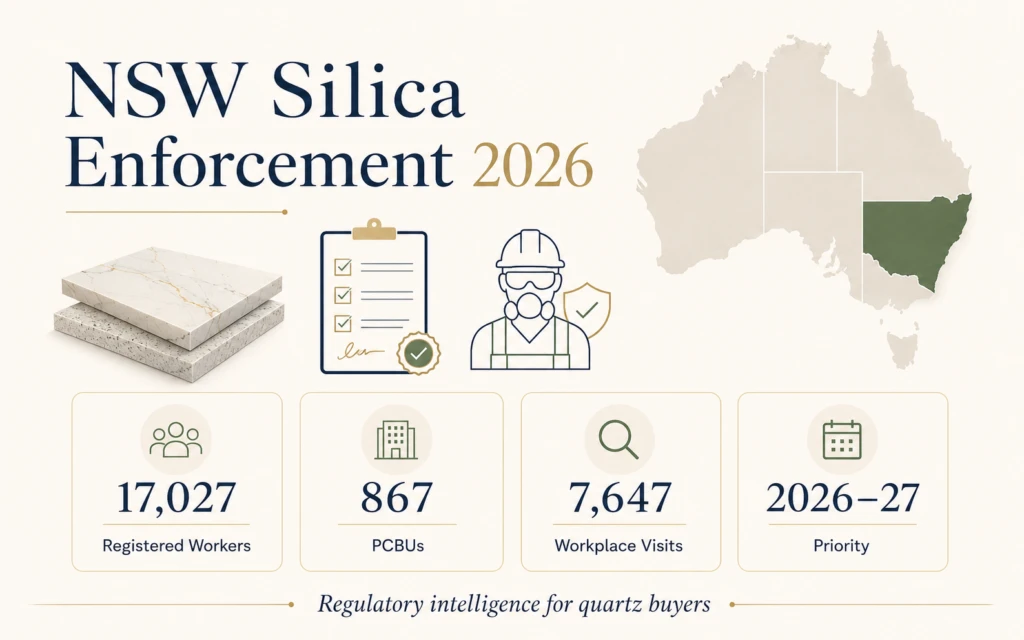
Silica rules, tariff exposure, and certification differ by market, and they have moved fast through 2026. The silica-compliance map and the 2026 global silica regulations roundup cover what importers in each region need to clear customs and jobsite compliance before slabs leave the factory. Quartz distributors rarely absorb this compliance burden for you — verify the documents regardless of who ships.
Slab sizes, thickness, and container loading
Standard jumbo slabs run 3200 × 1600 mm; project slabs 3000 × 1400 mm or 3000 × 1500 mm; super-jumbo formats reach 3530 × 2030 mm. Thickness is 20 mm or 30 mm. A 20 ft container to the US East Coast typically holds about 105 slabs at 20 mm or about 70 slabs at 30 mm — your forwarder confirms the exact count against crate dimensions. For customs, slab classification sits under HS 6810; confirm the subheading with your freight forwarder. See the full quartz slab sizes reference for crate and pallet detail. The thickness and format range published per program is listed under our quartz slab specifications.
Slab pricing: what quartz distributors and factories actually quote
Slab price is not a single number. Color complexity, printed versus solid veining, thickness, batch size, crating, and ocean freight all move it. The pricing guide breaks down the cost stack so you can read a quote instead of guessing at it. Whether you are quoting against quartz distributors or factory programs, the cost stack underneath is the same.
Request a supply review
If you have volumes, colors, or a delivery window in mind, the fastest next step is a supply review. Send the spec sheet and we come back with a production plan, a container build, and a landing-cost estimate for your market. Request a Supply Review.
Start from the markets you sell into, then shortlist distributors who already carry the colors your customers ask for and can show batch photos from the source plant. Verify the manufacturer behind the stock before you commit — the remote-vetting guide covers the checks.
Usually yes on landed cost, because you skip the distributor margin and can consolidate several colors into one container. The trade-off is minimum run and production lead time, which a distributor absorbs by holding stock.
Most engineered-stone plants offer private-label and exclusive-color programs once the run clears their minimum. Custom veining, book-matching, and printed patterns are typically available from the manufacturer, not the distributor.
Jumbo 3200×1600 mm, project 3000×1400 / 3000×1500 mm, and super-jumbo up to 3530×2030 mm, in 20 mm or 30 mm. Your forwarder confirms container count against crate size.
They should, but the document originates at the manufacturer. Ask the distributor for the mill’s silica test report and confirm it matches the slabs you receive; the 2026 compliance roundup lists what each market requires.
Learn how we manage origin, QC and documentation on the supply chain page.